







Welcoming guests into the home is a normal part of a tenancy. And as a landlord, you should expect to see people coming and going at various times throughout the term of a lease agreement. However, determining whether a new face is a short-term guest or on their way to establishing residency can be challenging even for even the most laid-back landlord.
Here’s the thing: Tenants are absolutely allowed to have guests on the property. It doesn’t matter if they’re friends, romantic partners, or family members. The covenant of quiet enjoyment grants tenants the right to uninterrupted use of the property in any way that doesn’t directly violate the lease agreement or break the law, including welcoming guests into the rental unit.
But even though tenants have the right to host guests, that right isn’t unlimited, and it’s not hard to see how easy it is for a couchsurfer to become a full-time roommate. So, when does a guest become a tenant? Let’s break it down.
Create a custom lease agreement
Set up customizable lease agreements right in your TurboTenant account! Purchase a single lease agreement on subscribe and receive unlimited lease agreements, plus electronic signatures and landlord forms.
Guests vs. Tenants
The difference between a guest and a tenant is clear. A tenant has signed a lease agreement, pays rent on a monthly basis, and adheres to the terms outlined in the rental contract.
A guest, on the other hand, is a person who stays on the property for a few days, does not have a signed agreement with the property owner, and does not pay for rent or utilities.
While there can be some gray areas in the legal transition between guest and tenant, common sense suggests that if a guest lives on the property for longer than a couple of weeks and contributes financially to the expenses of the home, it may be time to have a chat with your tenant and review the lease.
Examples of Guests vs. Tenants
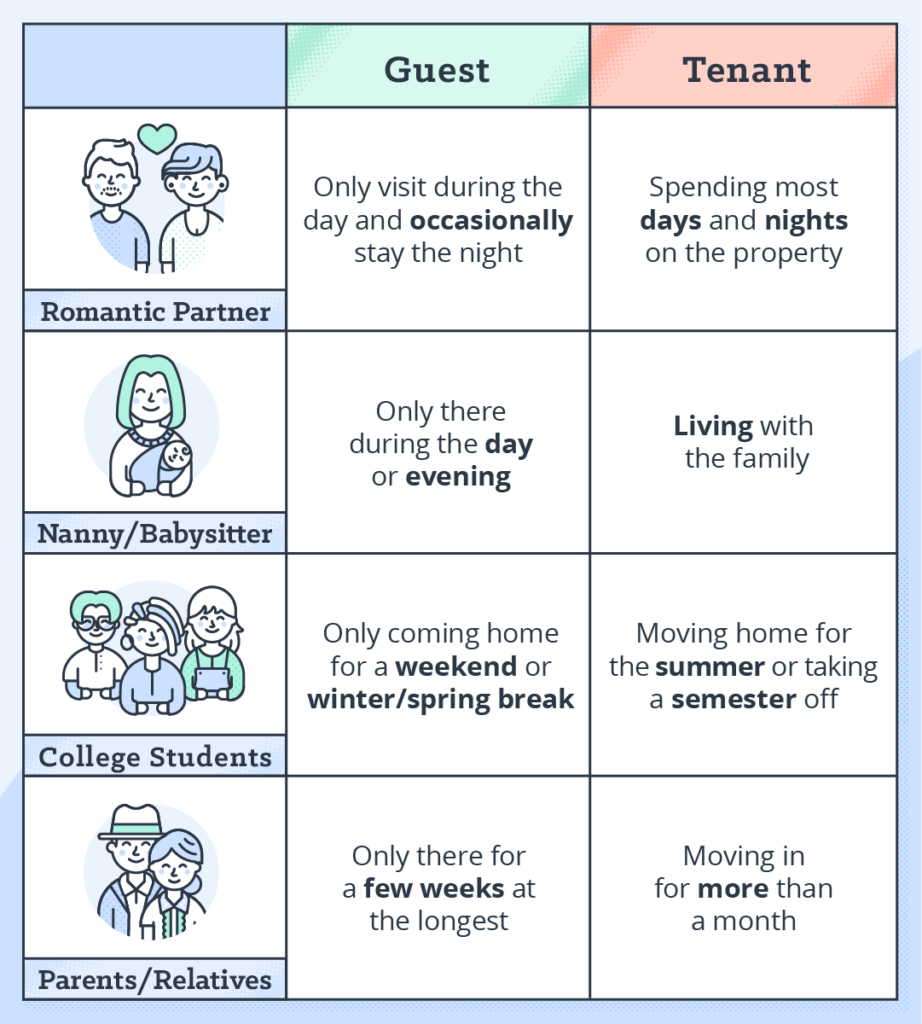
- Nannies – A full-time, live-in nanny would be considered a tenant. If the nanny only visits the property during business hours and doesn’t stay overnight regularly, you could consider them a guest.
- Romantic partners – Consider partners who occasionally stay on the property as guests. Once a partner begins to remain over most nights, park at the property frequently, or keep a large amount of personal belongings on the property, they have become a tenant.
- Visiting family – Any family members staying on the property for a few days are considered guests. If an elderly parent or sibling moves in for a longer term, they would be considered a tenant.
- College students – If college students return to stay with their parents or family over breaks or on weekends, then they are considered guests. If students move back in for a period longer than a couple of weeks, such as during summer break, you can regard them as tenants.
Residents vs. Tenants
Understanding the distinction between residents and tenants is also crucial for this discussion. While the two concepts are closely related, it is essential to understand their differences.
Generally, once a person has lived on the property for a specified period (as mandated by local laws), they transition from a guest to a resident. However, a resident typically does not become a tenant until they sign a lease agreement with the property owner. Additionally, if the property owner resides on the property, they are also considered a resident, rather than a tenant.
While the question of residents versus tenants can be trickier to answer, the most significant factor in making the determination is usually the presence of a lease agreement.
How many days can a tenant have a guest visiting in the home?

While the specific time limit you choose to impose on the maximum length of stay for guests on your property is up to you, most landlords prefer to limit the length of stay to 10-14 days. Ensure that the lease explicitly includes this language in it, and consider requiring the tenant’s initials in that section to ensure it’s clearly understood.
When does a visitor become a tenant?
Each state has different rules around when a visitor or guest becomes a tenant. In states like California, Colorado, and Florida, a guest can become a tenant just by staying in a property for 14 days in a 6-month period. In California and Florida, a tenant can become a guest when they remain in a property for 7 straight days.
Other factors that could impact their status include receiving mail at the property, contributing to rent or bills, or providing services in exchange for staying in the property. Like many aspects of landlord-tenant law, state-specific differences require landlords to thoroughly research their local laws to determine what they can and cannot do.
We encourage landlords to communicate with the tenant regarding the lease and, if necessary, add the guest to the lease.
If the situation feels untenable, landlords can initiate the process of terminating the lease and proceed with the eviction process if necessary. We’ll break down these considerations a bit more in just a bit.
Signs That a Guest is Establishing Residency
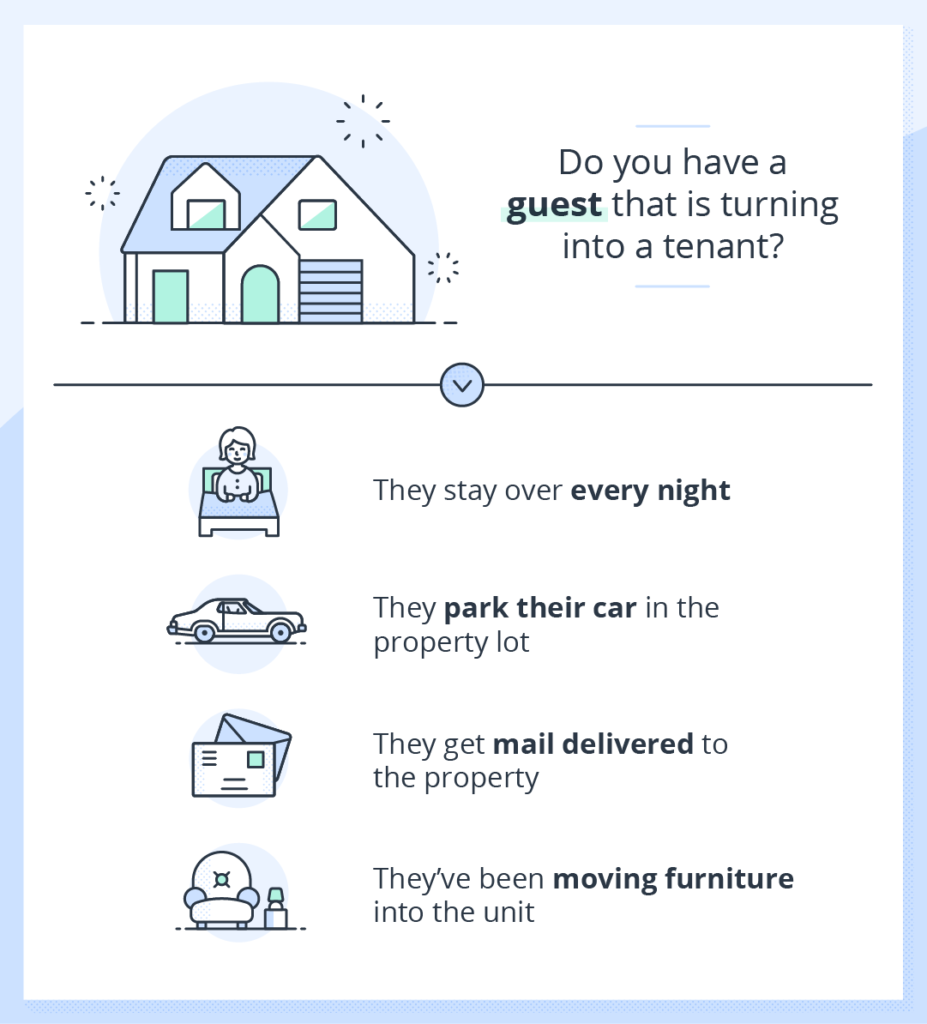
It’s usually pretty easy to tell if someone other than your tenant has lived on the property for an extended period of time. But if you live out of state or need to collect some additional evidence that might suggest a guest has established residency, here are some clear indications:
- The guest stays over every night consistently.
- The guest parks their car in the property lot every day.
- The visitor receives mail at the property in their name.
- A trusted neighbor sees the guest moving furniture into the home.
What should I do if a tenant has a long-term guest?
#1: Consider Adding them to the Lease
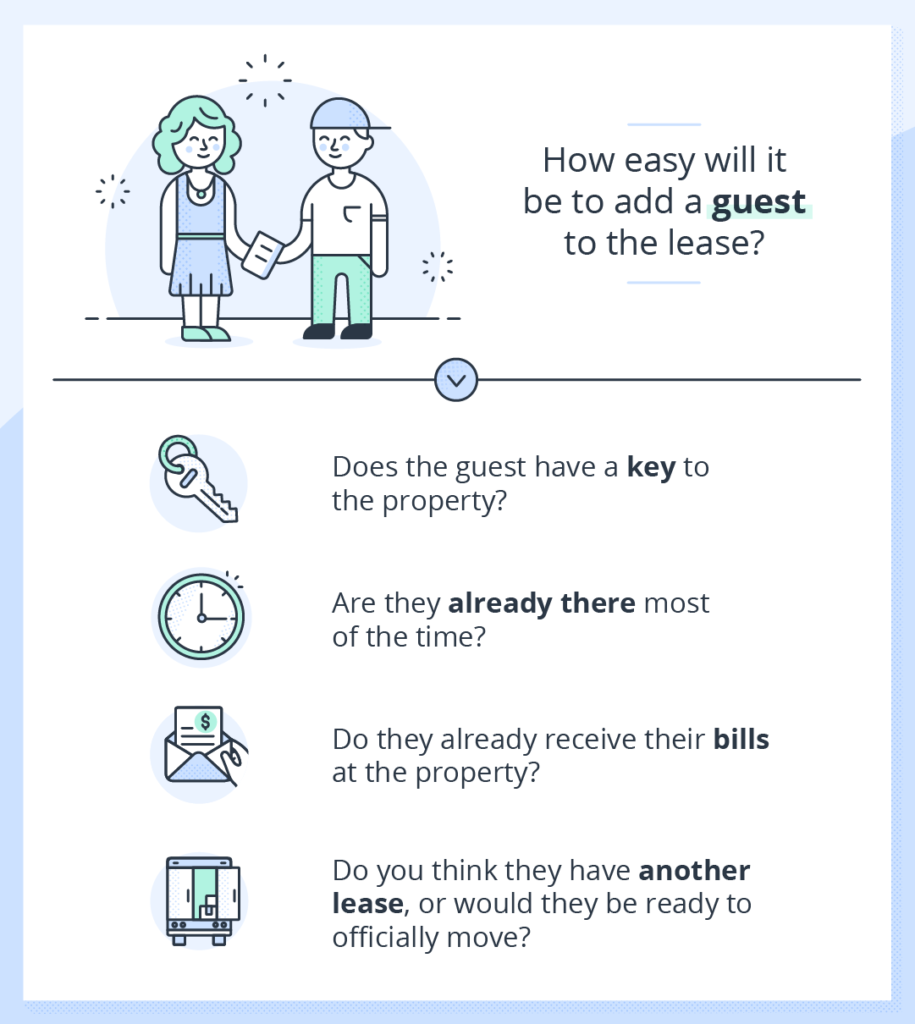
Once you notice some clear signs that your tenant might have a permanent, long-term guest staying on the property, adding them to the lease will help protect you legally. Tenants are obligated to adhere to the lease agreement, and all that that entails. If they don’t, your lease agreement must outline recourse.
If you’re wondering if you should add the guest to the lease or ask them to leave, ask yourself the following questions:
- Do they have a key to the property?
- Are they on the property more than 50% of the time?
- Have they already made arrangements to receive bills at the address?
- Do you think they have another lease?
#2: Speak with the Tenant
Approaching a difficult conversation with a tenant isn’t the most fun part of being a landlord. While it can be difficult to have the conversation, come prepared and bring a copy of the lease, which will enable you to point out the specific section that addresses guests staying on the property.
Be understanding and courteous while also explaining that policies in the signed and executed lease are non-negotiable. You can also discuss whether or not the tenant wants to add the guest to the lease agreement, if that’s a path you’d like to pursue.
#3: Follow Through
Follow up with your tenant after a few days to address next steps. You could either add the guest to the lease or confirm that the guest has vacated the premises. Remind your tenant that the lease agreement is the basis for their tenancy, and continued violations of lease terms may result in the termination of their tenancy and/or eviction proceedings.
If you choose to allow the guest to sign the lease, require them to fill out a rental application and conduct a tenant screening to ensure that they’ll be a good fit for the property, just like any other resident you accept.
When does a guest become a tenant? FAQs
Why is it important to identify long-term guests?
Once a guest has legally established residency, they have technically become a tenant. Any tenant who lives on the property without being listed on the lease could expose the landlord to considerable legal risk, especially if an accident occurs on the property.
Should I accept rent from a guest?
No. Accepting rent from a guest implies residency, which could create a legally challenging situation for the landlord if that person does not appear on the lease. Only accept rent from people who have signed the lease agreement.
Can I evict a tenant if they refuse to add their guest to the lease?
Yes. Once you’ve given the tenant a chane to cure the violation and either asked the guest to leave or chosen to add them to the lease, eviction is an option.
DISCLAIMER: TurboTenant, Inc does not provide legal advice. This material has been prepared for informational purposes only. All users are advised to check all applicable local, state and federal laws and consult legal counsel should questions arise.