


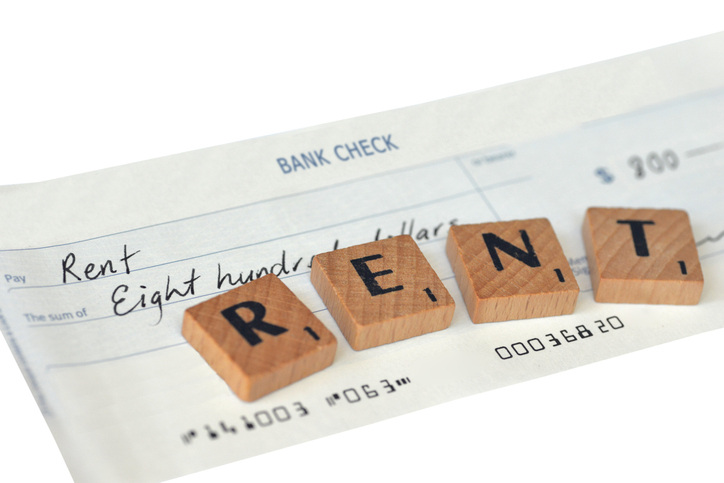




Your landlord just approved your rental application and sent over the lease agreement. When reading through the rental terms, one thing catches your eye. Your landlord’s preferred payment method is… checks? In a world of autopay and instant transfers, you may be unfamiliar with checks altogether. Don’t worry. Here’s everything you need to know about how to write a check for rent.
In this TurboTenant guide, we explain a step-by-step process for writing a rent check, including best practices and common mistakes to avoid. And if checks really don’t work for you, we walk you through how to ask your landlord to switch to online payments using rent payment software.
Easily Collect Rent Online
Get the All-in-One Solution
Why Paper Checks are Still Common in 2026
When creating your lease, landlords describe your rent payment’s specific details, including:
- Amount due,
- Monthly due date,
- Preferred payment methods,
- Instructions on how to pay,
- Late fees (if any), and
- Grace periods (if any).
Even though we’re in the digital age, many landlords still prefer paper checks. The time-tested method may feel retro, especially if you’re used to making electronic payments. However, checks bring many benefits to both landlords and tenants, such as:
- Accuracy: Because checks specify your payment details, including the date and amount, you avoid late fees and other penalties.
- Instant paper trail: These payments create a clear record to prevent misunderstandings and rent disputes.
- No fees: Tenants don’t have to pay credit card processing fees or ACH transfer fees each month if they use a personal check.
- Trusted: In the past, checks were the gold standard for rent payments. If your landlord’s been in the business for years, they may prefer this reliable method.
Whether you’re paying rent for an apartment or a house, checks make your payment process clear and easy. And while digital platforms like TurboTenant are modernizing the rental business, many private landlords still rely on traditional paper checks.
The Anatomy of a Rent Check: What You Need Before You Start

Before we discuss how to write a rent check, make sure you have everything you need to get started. Gather the following three items to set yourself up for success:
A Valid Checkbook
First off, grab your checkbook. We recommend checking your account balance to confirm you have sufficient funds. It’s also a good idea to double-check that your personal check displays your full name and current address.
Remember, even small mistakes can delay your payment processing or create risk.
A Blue or Black Pen
Next, you’ll need a blue or black ink pen. Never use a pencil or colored ink — so put away your favorite red pen. We recommend erring on the side of caution and using dark blue ink to distinguish an original check from a photocopy.
Did You Know? In 2026, fraudsters used a method called “check washing,” in which they stole checks from the mail and chemically removed the ink to alter the details. Standard ballpoint ink allows fraudsters to tamper with your check, but gel pens prevent chemical alteration.
Pens like the Uni-ball 207 bond more deeply to the paper fibers. Use them to boost security and add an extra layer of protection.
The Landlord’s Exact Legal Name
Finally, the last piece of information you need is the landlord or property manager’s full legal name. Check your lease agreement to see who to make your check payable to. In some cases, it could even be a property management company.
To help your landlord deposit the check without issues, ensure all details are consistent, including punctuation and business designations (such as LLC or Inc.).
Once you’ve gathered these essential details, you’re ready to start. Next, we’ll cover a step-by-step guide to writing a rent check.
How to Write a Check for Rent in 6 Steps
Follow our six steps to learn how to write a rent check the right way.
Keep in Mind: Your landlord will probably use their mobile banking app to deposit the funds. Use clear, precise handwriting to avoid rejected deposits, late-payment penalties, and other rent-related headaches. Take your time and start over if you make a mistake.
Step 1: Add the Date
First, write the current date in the top right corner of the check. When writing a check, don’t use abbreviations. Use the full month, day, and year.
Example: [January 1, 2026]
Don’t post-date checks without your landlord’s written consent to make it appear you wrote them earlier than you actually did. And even if you add a future date to delay the withdrawal of the funds, your landlord can still deposit the check as soon as they receive it.
Step 2: Write the Recipient’s Name
Next, fill in the “Pay to the Order Of” portion. Write your landlord’s full legal name on the line, using the same spelling as your lease agreement. Don’t forget to include any business designations (LLC or Inc.), but only if they’re in your rental agreement.
Example: [John B. Smith] or [Sunrise Rentals LLC]
Double-check that the name is typo-free and clear. Even a tiny typo can cause deposit errors.
Step 3: Fill in the Dollar Box
Then, write out the numerical rent amount. Look for the small box next to the dollar sign on the left side of the “Pay to the Order Of” line.
Example: [1,950.00]
Use neat handwriting when drafting each number to avoid processing delays.
Step 4: Include the Written Amount
Next, write the full rent amount on the line below “Pay to the Order Of.” Traditionally, you write cents as a fraction over 100. If your rent amount is a clean, full dollar amount, write it as “00/100.”
Finally, draw a straight line or an elongated dash to fill any space and prevent fraud.
Example: [One thousand nine hundred fifty dollars and 00/100———]
Step 5: Fill in the Memo Line
Next, identify the payment’s purpose on the memo line. We recommend adding the following details:
- The transaction’s purpose,
- The payment’s month and year, and
- Address and unit number.
Example: [Rent, January 2026, 246 Main St Unit 3B]
Step 6: Sign the Check
Lastly, sign your full legal name. Make sure your signature matches the one on your bank account to keep things consistent. If your signature doesn’t match the bank’s records, your financial institution could reject the check.
And that’s it! You now know how to write a rent check. By following these six steps, you prevent app deposit issues, processing delays, and late payment penalties. Writing the information clearly and legibly isn’t just polite, it’s a security measure.
Personal Checks vs. Cashier’s Checks: What’s the difference?

Tenants can pay rent with either a personal check or a cashier’s check. But how are they different? And what’s the best option?
Both types of checks allow you to transfer money to your landlord, but there are some key distinctions to keep in mind. Here’s what you need to know:
Personal Check
When you think about a check, a personal check is probably what comes to mind. Think about your parents pulling out their checkbook to make a payment. These types of checks withdraw money directly from your checking account. When your landlord deposits it, their bank checks your balance to ensure you have enough funds in your account.
If you have enough money to cover the check’s amount, the transaction goes smoothly. But if you’re short, the check can bounce — triggering bank fees and lease penalties, like late fees.
Most landlords accept personal checks, but some landlords require cashier’s checks in their lease agreements. Here’s why:
Cashier’s Check
In short, a cashier’s check guarantees payment. When you request one, the financial institution immediately pulls the funds from your account. Then, they issue a check using the money. Because the bank holds the funds, the checks can’t bounce due to insufficient funds.
Did You Know? Many landlords require their tenants to pay first, last, and security using a cashier’s check. The initial move-in costs are often higher than the monthly rent, so landlords prefer this guaranteed payment method.
How to Get a Cashier’s Check
If you’re wondering how to write a cashier’s check for rent, you can get one from a bank or a credit union. You’ll need to provide the following:
- A valid ID,
- The exact payment amount, and
- The payee’s full legal name (your landlord or property manager).
But unlike personal checks, the financial institution fills them out for you. Additionally, banks typically charge a fee of $5 to $15 per cashier’s check. After you pay, they’ll hand you the check, and you can submit it to your landlord.
The key takeaways? Personal checks are convenient and easy, but they can bounce if your account balance doesn’t cover the amount of the transaction. On the other hand, cashier’s checks guarantee funds, but you have to physically go to a bank or credit union to pick one up.
Common Mistakes That Cause Returned Checks
We’ve seen tenants make these common mistakes when learning to write a rent check. Keep them in mind so you can avoid making them, too:
- Insufficient funds: Always confirm your account balance before writing a check. After you give the check to your landlord, make sure you keep sufficient funds in the account until the rent amount clears. Otherwise, you may incur bank fees, lease penalties, and a bad reputation with your landlord.
- Typos: Double-check the date, dollar amount, memo line, and payee name. If you add inconsistent information, you create confusion and possible delays.
- Forgetting to sign: Banks always reject unsigned checks, so be sure to sign.
- Pencil or erasable ink: Again, using erasable media is a no-go. Reduce fraud risk by using a blue or black gel pen.
Always proofread your check to avoid delays when paying your rent for a house or an apartment.
Made a mistake when writing a check?
If you mess up, simply start over on a new check. But first, write “VOID” across the check in big letters. Additionally, keep the void check for your records. Tossing it in the trash creates a security risk.
The Modern Alternative: Switching to Online Payments
We hope this guide helped you understand how to write a check for rent payment.
As you can see, writing checks is tedious. Landlords have relied on checks for decades, but they’re slow and lack the security features of modern software, such as bank-level encryption. If you’re interested in streamlining your monthly payments from A to Z, consider making them online.
Online rent collection tools offer autopay, instant receipts, and even credit reporting tools to help build your credit score. Plus, you don’t have to run to the store to buy stamps or use a paper checkbook.
If your landlord doesn’t accept digital payments, tell them about the benefits for rental owners, including:
- Free for landlords (when you use TurboTenant)
- Automatic late payment penalties (including late fees)
- Instant rent receipts
- Convenient mobile access
- Bank-level encryption
- Integrated accounting tools (with an all-in-one platform)
- Tax prep and 1099 generation
Talk to your landlord about using rent payment software today to make monthly payments a breeze.
How to Write a Check for Rent FAQs
Can I write a check in pencil?
No, you can’t use a pencil to write a check for rent. Always use blue or black permanent ink. As a best practice, opt for a gel pen. It’s harder for fraudsters to chemically alter the check and input their own details.
What if I don’t have checks?
Consider using a money order or a cashier’s check. We recommend checking your lease to see your landlord’s list of accepted payment methods. If you’re unsure, ask your landlord which payment method they prefer.
Can I post-date a rent check?
We don’t recommend it. It creates risk, and in some states, even violates the law. Always include the current date and follow the step-by-step guide to writing a rent check listed above.