Join the 1 million+ independent landlords who rely on TurboTenant to create welcoming rental experiences.
No tricks or trials to worry about. So what’s the harm? Try it today!

Tenant abandonment is one of the most stressful situations a landlord can face. Rent stops coming in, belongings are left behind, and you’re left wondering whether your tenant plans to return or has simply walked away. The uncertainty can make it challenging to protect your property, stay compliant with state laws, and maintain a stable financial situation.
This guide explains what to do when a renter disappears, how to confirm tenant abandonment, and how to structure your lease agreement to protect yourself beforehand.
By understanding your rights and responsibilities, you can handle tenant abandonment with confidence and maintain a smooth operation for your rental business.
Tenant abandonment happens when a renter leaves before the end of their lease term without notice and stops paying their rent. In most cases, they also remove personal belongings and fail to communicate their intent to return.
Legally, the definition varies by state, but it generally covers this combination of nonpayment, vacancy, and lack of contact. We’ll cover some state-specific considerations later in this guide, but it’s always a good idea to confirm your local requirements before taking action.
For landlords, this situation can be stressful. You rely on consistent payments to cover your mortgage, maintenance, and property expenses, yet you still have to follow the law when responding to an apparent abandonment.
Common reasons tenants abandon a rental include:
While it’s tempting to re-rent the unit quickly, landlords must follow the proper legal process before doing so. Acting too soon can lead to wrongful eviction claims or fines, so proceed carefully and document every step.
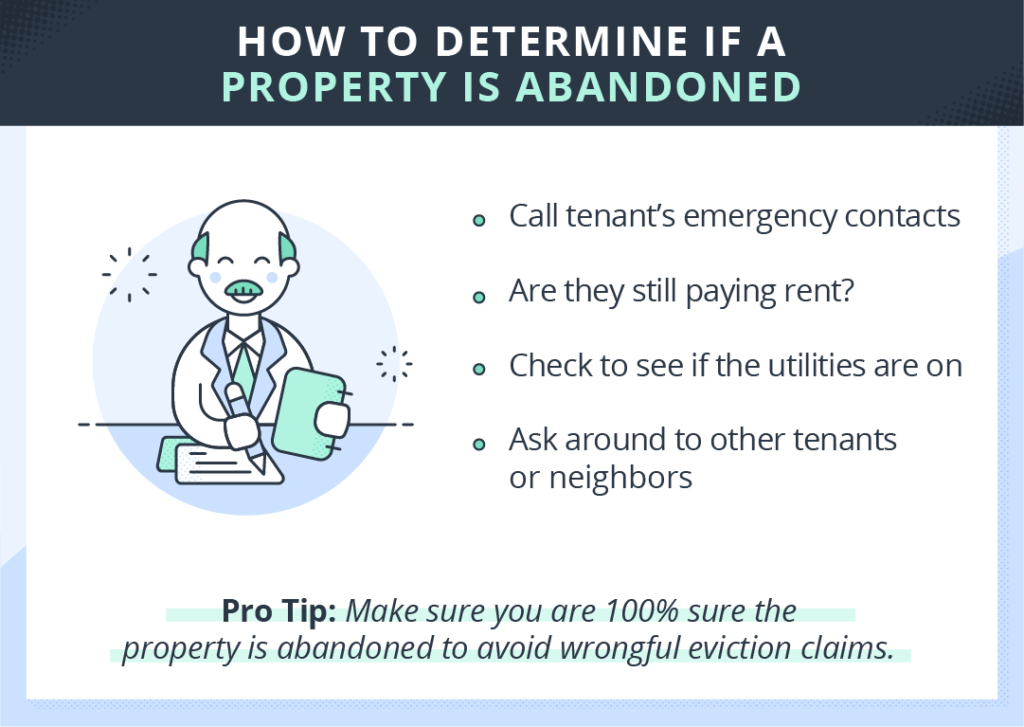
One of the first questions landlords ask is, “How long does a tenant have to be gone before it’s considered abandoned?” The answer varies by state, but in most cases, you’ll need clear evidence before making that call.
Look for several signs together rather than relying on just one.
Check rent payments and reach out: When rent payments are still coming in, the tenant most likely hasn’t abandoned the property. Touch base to learn their plans, and if they expect to be away, request notice and arrange a quick walkthrough.
Verify utilities: Once you’ve given proper notice to enter, confirm whether essential services, such as electricity, water, or heat, are still operational. If utilities are off, the tenant likely abandoned the property.
Talk to neighbors: Speak to nearby residents to see if they’ve seen the tenant moving out or if the unit appears unused. A quick conversation can provide valuable insight.
Reach out to emergency contacts: If the tenant remains unresponsive, contact the emergency references listed in the lease agreement. They might know whether the tenant intends to return or has relocated unexpectedly.
By checking multiple sources and documenting what you find, you’ll reduce the risk of assuming abandonment too soon and protect yourself from wrongful eviction claims.
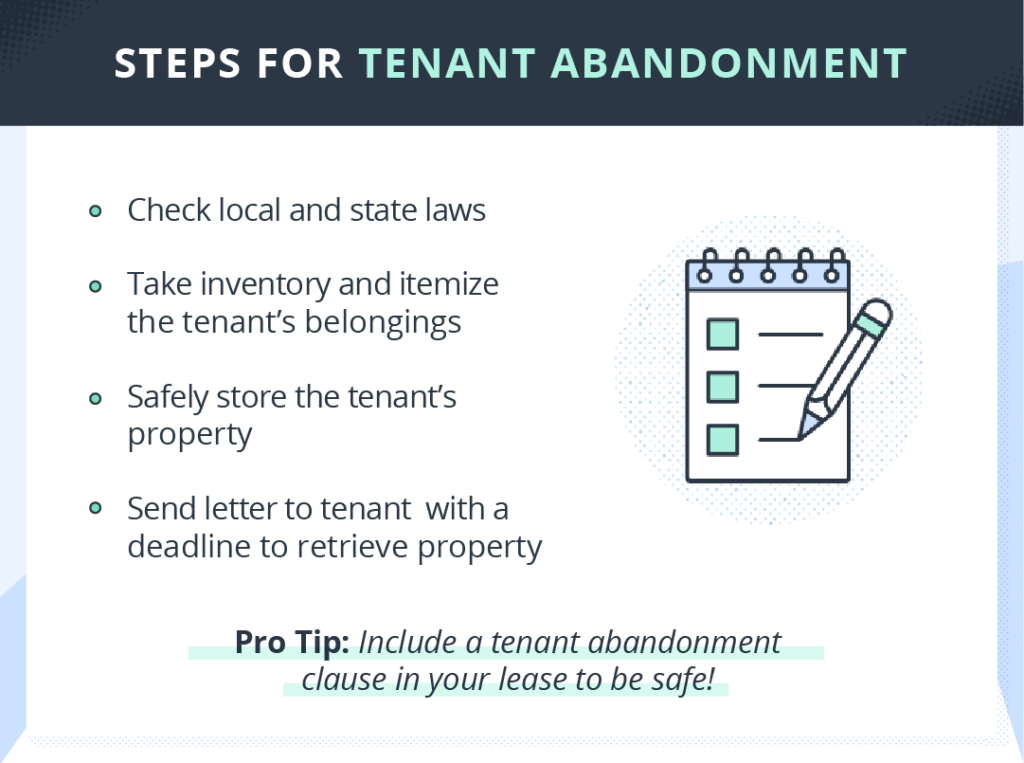
Once you’ve confirmed tenant abandonment, you can follow these steps to stay compliant and protect your investment.
Begin by reviewing your state’s landlord-tenant laws. Many states spell out how long you must keep abandoned property, how to notify the tenant, and what to do if the items go unclaimed.
Be sure to take clear photos and create an itemized list of anything left behind. Your detailed records are the best defense if disputes pop up later or if the tenant tries to claim you disposed of items improperly.
Most states require landlords to store personal belongings for a specified period before disposing of them. Keep the items in a locked unit or designated area and maintain receipts for any storage-related expenses.
Mail a certified letter to the tenant’s last known address. It should explain where their property is stored, how long they have to reclaim it, and any associated storage costs. You’ll also want to clearly outline what happens if they don’t respond within the legal timeframe.
Even if rent is behind, don’t re-rent the unit until the legal abandonment process is finished. Moving too quickly can expose you to fines or wrongful eviction claims, which can cost far more than the missed rent.
Following these steps helps you stay compliant, protect your property, and minimize the financial impact of tenant abandonment. Once you resolve the situation, it’s worth updating your lease agreement to help prevent issues in the future.
 You can’t always prevent tenant abandonment, but your residential lease agreement is your best line of defense. A clear and detailed lease helps set expectations early and provides a legal framework in case a tenant leaves unexpectedly.
Start by including specific requirements that explain the amount of advance notice tenants must provide before moving out. In most rentals, 30 days is standard, but putting it in writing avoids confusion later. Define what qualifies as tenant abandonment in your agreement, such as unpaid rent for a specific period combined with clear signs that the tenant has vacated, like disconnected utilities or removed belongings.
Next, outline how you’ll handle any personal property left behind. Clarify how long you’ll store items, whether fees apply, and what happens if they go unclaimed. Reading state-specific landlord-tenant laws will be your guide; we cover a few states below.
You should also explain your entry and inspection rights, making it clear that you’ll provide proper notice before checking on the unit. Finally, describe how re-renting works after abandonment, including how you’ll recover unpaid rent or damages.
Once your clauses are in place, store your documents securely and keep everything organized.
Sign up for a free TurboTenant account today to build stronger lease agreements, simplify your recordkeeping, and reduce the risk of tenant abandonment.
Each state has its own definition of tenant abandonment and different rules for how landlords must handle it. Timelines, notice requirements, and storage obligations all vary, so it’s critical to know the laws that apply to your rental.
Here are a few examples of state-specific regulations:
Because these laws vary widely, always check your state’s landlord-tenant statutes before declaring a property abandoned or disposing of a tenant’s possessions. Staying informed helps you avoid fines, wrongful eviction claims, and unnecessary legal risk.
Disclaimer: This blog is for informational purposes only and is published by TurboTenant. It is not legal, financial, or tax advice. Laws and regulations for landlords vary by state and locality and may change over time. Always consult a qualified attorney, accountant, or local housing authority before making decisions related to your rental property. The publisher and authors assume no responsibility for actions taken based on the information provided.
This varies by state, but many laws set a timeline ranging from a week to several weeks without rent payments, utilities, or communication. Always check your local statutes.
Typically, when rent goes unpaid, utilities are shut off, belongings are left behind, and the tenant fails to respond to notices or contact attempts.
Document everything, notify the tenant in writing, store belongings securely, and follow the timeline required by law before re-renting the property.
If a tenant contacts you after you have provided them with an itemized list of the property, they may claim their belongings after paying the storage fees.