


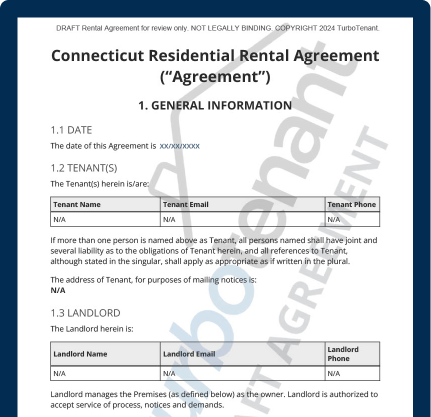

Connecticut month-to-month lease agreements offer flexibility over fixed-term leases, allowing either landlords or tenants to end the tenancy at any time with proper written notice. Known as “tenants-at-will,” tenants under these agreements have no set end date. This guide covers key aspects of Connecticut’s month-to-month rental laws, including required disclosures, rent rules, and security deposit regulations.
Navigate Connecticut Leases

Connecticut Month-to-Month Lease Agreement
Current PageBuild your Connecticut month-to-month lease agreement in 15 minutes or less.
Connecticut Residential Lease Agreement
Learn MoreCreate a compliant Connecticut lease agreement in 15 minutes with TurboTenant's rental contract builder.
Required Landlord Disclosures (5)
1. Lead-based paint: If a rental property was constructed before 1978, the landlord must tell the tenant about any known lead-based paint or related hazards.
2. Bed bugs: If a bed bug infestation occurs within a rental unit, the landlord must notify the tenant (Conn. Gen. Stat. § 47a-7a(c)).
3. Sprinkler systems: The lease must clearly state whether the rental unit has a sprinkler system and include the date of its most recent inspection (Conn. Gen. Stat. § 47a-3f).
4. Landlord’s identity: The landlord must include their name and contact details within the lease agreement. If tenants need to send legal documents, the lease must also list a valid mailing address (Conn. Gen. Stat. § 47a-6).
5. Common interest community: If the rental property is part of a common interest community, the landlord must inform the tenant in writing before the lease begins (Conn. Gen. Stat. § 47a-3e).
Required Notice to Terminate Month-to-Month Agreement
Landlords must give tenants at least 3 days’ written notice to end a month-to-month rental agreement (Conn. Gen. Stat. § 47a-23(a)).
Connecticut law does not specify a notice period for tenants who want to terminate a month-to-month agreement.
Rent Increase Laws
Connecticut law does not include any rent control or rent stabilization provisions. However, in some cities with at least 25,000 residents, local Fair Rent Commissions may enforce regulations that block landlords from increasing rent by an “excessive” amount (Conn. Gen Stat. § 7-148b).
As of October 1, 2024, landlords must provide month-to-month tenants with at least 45 days of written notice before implementing a rent increase (Public Act No. 24-5).
Create Your Connecticut Month-to-Month Lease Agreement
Save time and avoid legal risks by entering your property and lease details. TurboTenant will generate a complete, compliant rental agreement ready for digital signatures and tenant review.