



Don’t let your spare room serve just as storage. Rent it out to chip away at your mortgage with a room rental agreement. In North Carolina people are using this to offset utility costs and rising property values. Some of that rental income funds renovations or repairs.
Navigate North Carolina Leases

Room Rental Agreement North Carolina
Current PageConsidering renting out an extra room? Make it official with a North Carolina room rental agreement.
North Carolina Residential Lease Agreement
Learn MoreCreate a compliant North Carolina residential lease agreement with TurboTenant's rental contract builder in 15 minutes.
North Carolina Month-to-Month Lease Agreement
Learn MoreBuild your North Carolina month-to-month lease agreement in 15 minutes.
Types of Room Rental Agreements
- Room rental agreement: A legally binding contract between a live-in landlord and a tenant outlining the terms and conditions of renting the room.
- Roommate agreement: An agreement, typically non-legally binding, between co-tenants that guides the responsibilities of each party.
Breaching Contract
Failure to pay: If your tenant doesn’t pay rent, even after any grace period, that’s a clear lease violation. In North Carolina, you can initiate the formal eviction process if rent remains unpaid; however, you must follow the legal steps, including providing proper notice and proceeding through the courts.
Lease violations: Breaches aren’t limited to unpaid rent. Tenants might break the lease by damaging the property beyond normal wear and tear, having unauthorized occupants in the home, or ignoring house rules you’ve laid out.
Lease abandonment: If a tenant leaves the room without notice or stops paying rent and communicating, you can’t simply reclaim the space immediately. North Carolina law generally requires landlords to take reasonable steps to confirm that the tenant has truly abandoned the unit before renting it to someone else.
Self-help evictions: It’s illegal in North Carolina to evict a tenant by changing the locks, shutting off utilities, or removing their belongings without a court order. All evictions must go through the formal legal process to ensure both landlords’ and tenants’ rights are respected.
Landlord Room Access Laws
Immediate access: You can only enter a tenant’s room without notice in true emergencies, such as a fire, major water leak, or safety hazard that requires immediate action.
Landlord harassment: Repeatedly showing up unannounced or using access as a means to pressure tenants into leaving is considered harassment.
Advance notice: While North Carolina law doesn’t specify an exact minimum notice period, it’s standard practice to give at least 24 hours’ written notice before entering for inspections, repairs, or showings.
Create Your North Carolina Room Rental Agreement
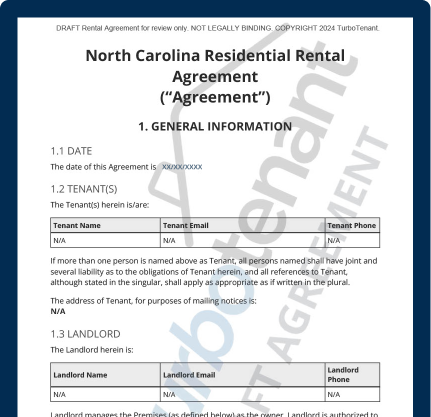
A North Carolina TurboTenant room rental agreement helps reduce confusion and conflict. It sets expectations and creates a respectful shared living space. Let us do the heavy lifting!