







The real estate professional status is one of the biggest tax advantages available for rental property owners — and it’s one of the most litigated pieces of the tax code. The IRS takes the real estate professional designation seriously because it allows landlords to use rental losses to offset active income, enabling significant tax savings.
If you’ve considered the real estate professional status (REPS) before, you know the requirements are strict and complex. That’s why we’re breaking down the key points in this article. We’ll explain what the real estate professional designation is and why it’s worth the trouble. You’ll learn how you can qualify for REPS, red flags to watch out for, and strategies you can use to make REPS work for you. Plus, we’ll share a tool to help you prove your status as a real estate professional.
Disclaimer: This article is for informational purposes only and isn’t intended as tax, legal, or accounting advice. Consult with your tax, legal, and accounting advisors for guidance on your specific situation.
What is a real estate professional?
The real estate professional status (REPS) is a tax designation. The IRS typically treats rental property as a passive activity, and they have rules about how you can treat the income and losses from your rentals. These passive activity loss limitation rules keep you from using your rental losses to offset the income from your W-2 job.
But when you qualify for REPS, you can treat rental income as nonpassive. That means you can apply rental losses to your active income — without limits.
Is the real estate professional status worth it?
Aside from eliminating the passive activity loss limitations, the real estate professional tax benefits are significant:
- You can use accelerated depreciation on your rental properties. This gives you larger deductions early on, easing your cash flow and reducing your taxable income.
- The 3.8% net investment income tax may not apply to your rental income. This tax applies to investment income, like rent, royalties, dividends, or interest. With the REPS, though, rental income isn’t an investment. It’s earned as part of your regular business.
- When you sell a property, you may have lower tax rates applied to long-term capital gains. You’ll have a lower tax burden compared to your potential bill with the regular tax rates.
The downside of the real estate professional tax status is that it comes with stringent qualification rules. Qualifying is nearly impossible for a single individual with a full-time job outside of real estate. The IRS disqualifies many taxpayers from REPS due to inaccurate records or missing documentation. Others don’t qualify because they don’t group their properties in a timely manner, or they don’t meet the time requirements.
In short, REPS requires detailed records and time investments. Are you single and working 40-plus hours a week at another job? Do you have a time-intensive hobby or family needs? If so, the designation probably isn’t a good fit.
But maybe you’re already working in the real estate industry, or you’re married to someone without a full-time job. The time and effort needed for REPS can pay off with significant tax advantages for you.
Automate Your Rental Property Accounting
Use our efficient and accurate real estate accounting software to streamline all of your accounting, bookkeeping, and expense tracking needs.
How to Qualify as a Real Estate Professional
To qualify for REPS, you must pass a three-part test:
- 50% test: You spend over 50% of your work hours in real property trades.
- 750-hour test: You work over 750 hours in real estate businesses.
- Material participation test: You contribute significantly to each rental activity.
These requirements are strict, so understanding them is crucial. Let’s start with the basics.
What is a real property trade or business?
The IRS defines 11 options as real property trades:
- acquisition
- brokerage business
- construction
- conversion
- leasing
- management
- operation
- real property development
- reconstruction
- redevelopment
- rental
Note that financing or investing in real estate alone isn’t enough to qualify as a real property trade.
Are you involved in different real estate businesses? If you own a 5% equity stake in a real property business, your time may count toward REPS hours. You can combine the time spent in each business to meet the REPS tests.
If you’re a real estate agent, property manager, or landlord, your personal service hours for each role count toward the 50% and 750 hours test.
Key point: The grouping for your hours is not the same as the election to group your properties for material participation tests.
What’s the grouping election?
Initially, the IRS determines material participation separately for each property you own. For multi-property owners, this makes it hard to pass the test. That’s why the IRS allows rental property owners to group properties and treat them as a single real estate activity.
You can make the election by attaching a statement to your tax return. It’s binding until revoked, so it covers future tax years.
Did you know? If you have reasonable cause, you can request a late grouping election. Rev. Proc. 2011-34 outlines how.
Who counts as a material participant?
Material participation means you are involved with your rental property business on a regular, ongoing, substantial basis. The IRS has a seven-part test to determine whether you count as a material participant. This determination requires analysis of the circumstances and facts for your specific situation, but you only need to pass one of these tests:
- You worked on the activity for over 500 hours.
- You do basically all the work in the business.
- You worked in the business for over 100 hours during the tax year. You did the most work in the business, more than any non-owners and employees.
- The business counts as a significant participation activity. You took part in all significant participation activities for over 500 hours.
- You contributed significantly to the business for any 5 of the prior 10 years.
- You had a substantial part in a personal service activity in any of the 3 prior years.
Note: “Personal service” includes day-to-day operations of rental units.
- You took part in the activity on a consistent, ongoing, and consequential basis during the year, and your records confirm that.
Material participation tests are complex. We recommend you consult with your CPA to determine whether you meet one of the tests.
Red Flags for Material Participation with the Real Estate Professional Status
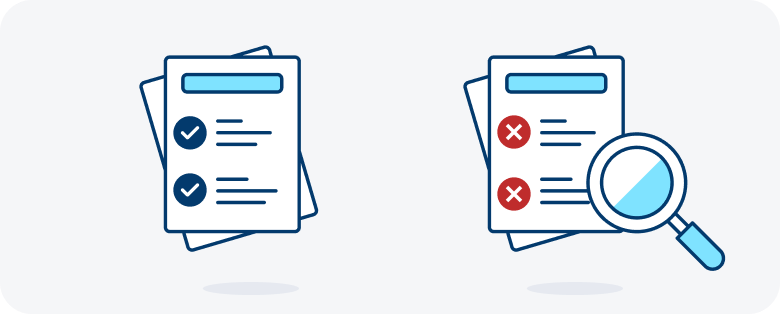
Passive activity limitations — including material participation — are among the most litigated issues in US tax court cases. Before you claim the real estate professional tax status, check to see if any of these red flags apply to you.
- You don’t receive any compensation for your services.
- You live hundreds of miles away from the rental business.
- You have a W-2 job that requires over 40 hours per week, and you receive significant compensation for it.
- If your full-time job requires 2,000 hours per year, you can’t qualify for REPS.
- You have several other investments, rentals, business activities, or hobbies that take up large amounts of time.
- Your rental has paid on-site managers, supervisors, or employees who handle daily oversight and operations.
- You have significant, limiting health issues.
- Most of your claimed hours are for work that doesn’t materially affect operations.
- Hours spent on travel, research, education, investor summaries, analysis, and financial monitoring don’t count as material participation. On-call hours aren’t eligible either.
- The business operations would continue without problems even if you didn’t perform the services claimed.
- The hours logged are for Airbnb and vacation rentals.
- Short-term vacation rentals are generally excluded from the IRS definition of passive rental property. Those work hours don’t count toward REPS.
A red flag isn’t always a deal-breaker for qualifying for REPS. It just means the IRS is more likely to challenge your case, and you’ll need to be diligent about your evidence and documentation.
What activities qualify for real estate professional status?
Part of the real estate professional requirements hinges on the activities you perform in your rental business. When evaluating your tasks, ask yourself this key question: Would this task affect your rental business’s daily operations?
If you answer yes, then log that task so it counts toward your REP status. If you answer no, then that’s not a substantial activity and wouldn’t support your REPS claim.
Key point: The hours you need for REPS and material participation hours aren’t separate. You don’t need to log 750 hours for REPS plus over 500 additional hours for material participation. However, simply logging hours to avoid passive activity loss rules isn’t enough. The goal for REPS is to log at least 750 hours on credible, substantial real estate activities.
Tasks like these will help you meet the real estate professional requirements:
- cleaning units once leases end
- collecting rent
- communicating with tenants
- creating and placing ads for the rental
- decorating units
- evicting tenants
- hiring and managing a property manager
- hours spent acquiring (not researching) property
- improving the property yourself or scheduling and managing contractors to handle improvements
- maintaining the grounds
- managing tenant applications
- preparing and negotiating leases
- purchasing supplies and materials for the rentals
- repairing the property yourself
- screening potential tenants
- showing the property to prospective tenants
- safety reviews and property inspections
- traveling to your rentals for business reasons, not commuting
What documentation do landlords need to prove material participation?

A key element of the IRS real estate professional requirements is your documentation. You must be able to prove how you spent your time, not only on real estate activities but also outside the business.
You’ll need detailed records showing your hours worked compared to those of others in the business, as well as your time spent on other businesses. That will help prove that you spent over 50% of your working time in your real property business — and that you spent more time on it than anyone else did.
Keep in mind that in past tax court cases, ballpark estimates, undated notes, and unverified, undocumented testimony didn’t count as proof. Your records should identify the services performed over a period and the approximate number of hours spent on those services during the period. Records must be complete and accurate, so it’s best to keep contemporaneous, detailed logs, like these:
- appointment books
- calendars
- credit card and bank transactions
- dated notes
- emails
- narrative summaries
- receipts
These records should support credible written logs with dates, times, and the work performed for each property. Include specifics about what you were working on.
Pro tip: Preparing records after the fact has been less successful in proving REPS in tax court. Keep track of your activities as you work.
Real Estate Professional Status Strategies
Although the real estate professional requirements are strict, these strategies may help you qualify for the designation.
Partner with Your Spouse
If you have a stay-at-home spouse or a spouse who works part-time, they can qualify for REPS. Your spouse could spend 750 hours on the real property business and more time in real estate than in their other job. This is how high-income earners can still benefit from REPS.
What if you’re married, and you both work in your rental property business? One spouse must pass tests 1 and 2. If you have multiple real estate concerns, all your rental activity counts for the 750 hours test, even if you haven’t grouped the properties into one business.
Remember: Work by children or employees doesn’t count toward the total hours required.
Start a Second Real Estate Business
If your property or tenants are relatively low-maintenance, a single rental property with low turnover or maintenance needs can make it difficult to meet the hours requirement. Use your experience to start a separate rental business to build up your REPS hours. You could flip houses, become a real estate agent, or be a property manager for other landlords. The key is that you still must show material participation.
Buy a Local Rental for Rehab
Out-of-state landlords may struggle to prove material participation. Buying a local property that needs significant renovations and improvement can help you meet the REPS hours requirement, especially if you perform some of the work yourself. Then, you can elect to group the rehab property with your out-of-state units.
Key point: You must rent out the property by the end of the year. Otherwise, it’s not a rental activity, and you’ll lose the time invested.
Stay Organized with TurboTenant Accounting
Clear, accurate, and credible records are crucial for landlords seeking the IRS real estate professional tax status. That’s where TurboTenant Accounting comes in. Our platform simplifies bookkeeping for rental property owners, so you can stay up to date, organized, and focused on your rentals, not your receipts.
With TurboTenant Accounting, you can track leases, automatically import and match transactions, keep mileage logs, and securely store documents, saving you time and keeping your books ready for tax season. Plus, you — and your CPA — will love our on-demand, real estate–specific reports, like the Schedule E, and our one-click tax packets.
Your real estate professional status depends on your books and records. Don’t jeopardize your status with inaccurate, messy books. Sign up for TurboTenant Accounting today!
Real Estate Professional Status FAQs
What activities qualify for real estate professional status?
You must pass a three-part IRS test:
- 50% test: You spend more than half of your total working hours in real property trades or businesses.
- 750-hour test: You work more than 750 hours in real estate businesses.
- Material participation test: You take part in your rental activities on a regular, ongoing, and substantial basis.
Qualifying also requires keeping credible, detailed, contemporaneous records of your hours and activities. You can strengthen your case by grouping your rental properties into a single activity, performing substantial day-to-day work, and avoiding red flags such as having a full-time W-2 job or living far from your rentals.
How to get real estate professional status?
You qualify by spending most of your working time in real property trades — such as acquisition, leasing, management, development, or rental — and meeting both the 50% test and 750-hour test. Then, you must show material participation in your rental business using one of the IRS’s seven tests (for example, working 500+ hours or doing most of the work yourself).
Strong documentation is essential. You should log tasks like showing units, screening tenants, negotiating leases, scheduling contractors, making repairs, collecting rent, performing inspections, and managing operations.
How to claim real estate professional status?
You claim REPS by meeting the IRS qualifications and proving them with detailed records. If you own multiple properties, you can make a grouping election by attaching a statement to your tax return that treats all rentals as one activity for material participation purposes. Your logs, calendars, emails, receipts, and summaries must show the hours, dates, and tasks you performed.
Maintaining organized, accurate books is critical — the IRS frequently challenges REPS claims, especially when records are vague, incomplete, or created after the fact.