Join the 1 million+ independent landlords who rely on TurboTenant to create welcoming rental experiences.
No tricks or trials to worry about. So what’s the harm? Try it today!

As a landlord, you’ll feel lost come tax season if you aren’t tracking rental property expenses correctly. Keeping detailed rental expense records will not only help you feel more organized, but it’ll also make filing your taxes easier, allow you to discover more opportunities for deductions, and calculate the ROI for each of your investments.
In this article, we’ll cover:
Automate Your Rental Property Accounting
Use our efficient real estate accounting software to streamline all of your accounting, bookkeeping, and expense-tracking needs.
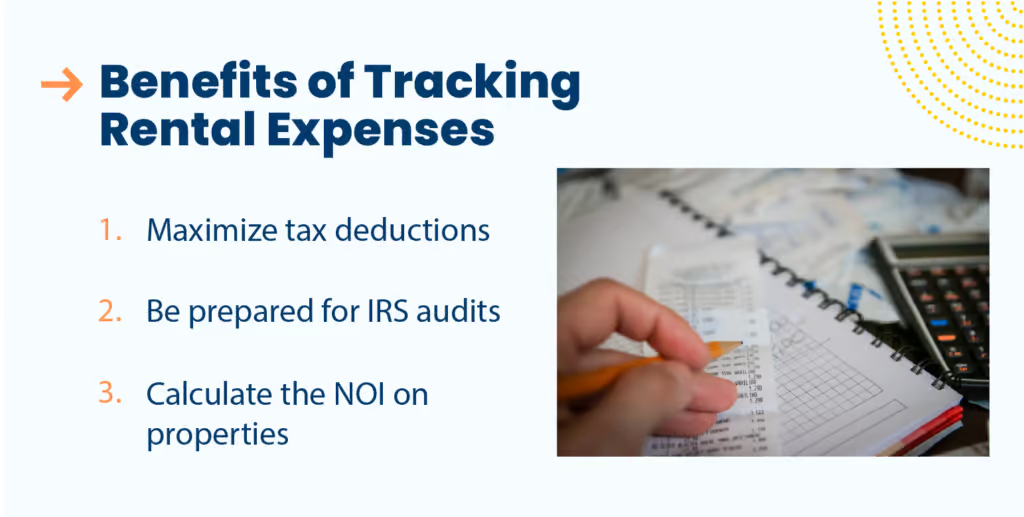
While it might seem like common sense to track your rental property expenses as part of the rental management process, there are additional benefits to consider. Maintaining detailed rental property expenses will help with these tasks:
When you accurately track your rental property expenses, you’ll avoid the headache of going back to calculate gas money or find receipts. Your future self (and CPA) will thank you for staying on top of your books.
What This Means for You:
There are only three ways to track your rental property expenses: manually, with the help of online tools, or by outsourcing.
Keeping track of your rental property expenses manually used to be the only way to do it. And when we say “manually,” we mean creating your own spreadsheets in Excel or Google Sheets or even recording transactions by hand on a worksheet or template. Along with manually recording expenses, you also have to keep receipts organized in a folder, either online, which may require scanning them, or in a physical file.
Keeping track of expenses manually can become stressful, tedious, and time-consuming. Luckily, in the age of virtual landlords, other options exist.
The alternative to tracking rental property expenses manually is to use an online tool like TurboTenant. Online landlord expense trackers were built to be fast, secure, and help you prepare for tax season. Your hand won’t cramp from writing in expenses, and you won’t have to worry about stapling receipts anywhere.
Plus, if you manage other aspects of your property online, like tenant screening or rent payments, tracking your expenses in the same place will be convenient.
In some situations, outsourcing your bookkeeping makes the most sense. If any of these situations apply to you, working with a bookkeeper may be a better option for you:
In these situations, hiring a bookkeeper can save you time, money, and headaches, so outsourcing can be a smart investment.
Did you know? With TurboTenant, you can easily add additional users to your account and assign roles. That means you can share your books with your accountant or bookkeeper while maintaining control over what they can see and do.
What This Means for You:

When it comes to what you should be keeping track of, your bookkeeping should reflect the Schedule E form. Most landlords use this IRS form to report rental income or losses. Rental income tracking is essential for accurate tax reporting, but for now, let’s focus on rental property expenses.
Schedule E categorizes common costs associated with rental property, so structuring your account books on the same categories can make tax prep easier.
To maximize your tax deductions, track expenses from these Schedule E categories.
| Schedule E Category | What This Covers | Examples of Common Expenses |
|---|---|---|
| Advertising | Costs to market or list your rental | Yard signs, online listings, mailers |
| Auto and travel | Transportation related to managing the rental | Mileage, parking |
| Cleaning and maintenance | Routine upkeep and turnover costs | Cleaning after move-out, lawn care, painting |
| Commissions | Fees paid to agents or managers to secure tenants | Leasing commissions, placement fees |
| Insurance | Insurance premiums paid by the landlord | Landlord policy, flood, or hazard insurance |
| Legal and professional fees | Professional services related to your rental | CPA fees, attorney consultations |
| Property management fees | Ongoing management services | Monthly property manager fees, management software subscriptions |
| Repairs | Fixes that keep the property in working order | Broken window, leaky faucet |
| Taxes | Property-related taxes (not income tax) | Property tax, local assessments |
| Utilities | Utilities you pay for (even if reimbursed later) | Water, electric, trash |
Keep in mind that the table of Schedule E categories is not an exhaustive list of everything you should track. Schedule E form has additional categories, plus you may want to track additional expenses not listed on the form.
The Schedule E expense categories can be broad, and if you’re new to rental property bookkeeping, making a mistake is easy. Watch out for these common errors with your bookkeeping.
| Common Deductible Expenses | Commonly Misunderstood or Limited Expenses | Why This Matters |
|---|---|---|
| Repairs and maintenance | Capital improvements | Improvements must be depreciated over time |
| Property taxes | Income taxes | Income taxes are not deductible on Schedule E |
| Mortgage interest | Mortgage principal | Only interest is deductible |
| Insurance premiums | Escrowed insurance amounts | Deduct what you actually paid |
| Utilities paid by landlord | Utilities paid directly by tenants | Only landlord-paid expenses qualify; if a tenant reimburses you for utilities, those cost are still deductible |
| Professional fees (CPA, attorney) | Personal legal or tax expenses | Must be rental-related |
Note: Tax rules can vary by situation. Always confirm deductions with a qualified tax professional.
Another thing to consider is how often you should be tracking rental property expenses. Ideally, you should track rental expenses as they occur, but choose a schedule that works best for you, whether it’s as you go or monthly. A great way to start is by updating your books each month when you’re tracking your online rent payments.
What This Means for You:
Ready to make the move to tracking rental property expenses online? You can easily do so in your TurboTenant account. Let’s walk through how to track rental property expenses:
Locate the Transactions tab in your dashboard—it will be on the bottom left-hand side under Accounting. To record an expense, click Add Manual Expense.
Then input the information related to the expense:
You can also add notes, descriptions, receipts or any other important documents for each transaction. Just click or drag to quickly upload attachments.
Click Add Expense to record the transaction.
In the expense table, you can review, edit, delete, and filter expenses by categories, property, or date ranges.
What This Means for You:

Once you have all of your rental property expenses correctly categorized, you can export the transactions you tracked. You can then give the file to your CPA or upload it to any financial software you use.
All you have to do is click the Export button in the top right-hand corner of the Expenses table, then our software will generate your CSV file. You can export on demand, then upload the CSV file to the bookkeeping software of your choice.
To save even more time, you can leverage REI Hub through TurboTenant. As part of our Pro subscription level, you can sync your TurboTenant account with REI Hub’s real estate accounting software. This allows you to transfer all your TurboTenant income and expense information and streamline your financial reporting in just a few clicks.
What This Means for You:
Say goodbye to digging for receipts and scrambling to find the right documents for your rentals during tax season. You don’t need an accounting background to run a successful rental property business—you just need a reliable bookkeeping system. With TurboTenant, you can track rental expenses, store receipts, and manage your books in one simple, centralized system.
TurboTenant’s partnership with REI Hub makes it even easier to share clear, organized records with your CPA and to streamline financial reporting as your portfolio grows.
By consistently tracking your rental expenses with TurboTenant, you can reduce bookkeeping errors, maximize deductions, and gain a clear picture of your rental’s performance.
Disclaimer: This blog is for informational purposes only and is published by TurboTenant. It is not legal, financial, or tax advice. Laws and regulations for landlords vary by state and locality and may change over time. Always consult a qualified attorney, accountant, or local housing authority before making decisions related to your rental property. The publisher and authors assume no responsibility for actions taken based on the information provided.
When you own and manage a rental property, you’ll incur several types of expenses. You’ll have costs related to your business, such as legal and property management fees, and also expenses related to the property itself, like maintenance and utilities.
Landlords can typically deduct these expenses:
Yes, it is completely free to use TurboTenant’s expense-tracking feature. You can also take advantage of automatic expense tracking (and rent payments) with our integrated accounting tool as part of our Pro subscription.