Join the 1 million+ independent landlords who rely on TurboTenant to create welcoming rental experiences.
No tricks or trials to worry about. So what’s the harm? Try it today!

When reviewing rental applications, proof of income is one of the most important items landlords should evaluate. Confirming a renter’s ability to afford the monthly rent helps prevent missed payments, costly evictions, and turnover.
In this guide, we’ll explain how to verify tenant income, spot potential fraud, and choose reliable renters. You’ll also find 12 accepted forms of documentation for apartments, duplexes, or single-family homes, plus a free downloadable income verification letter.
Landlords use income verification to ensure a renter can comfortably afford their rent. When tenants fill out a rental application form, they share details about their job, income, and credit history, but those numbers only tell part of the story. That’s why landlords ask for supporting proof (like pay stubs or tax forms) to confirm everything checks out.
These records show whether a renter’s earnings are steady and reliable. You can also use them to calculate the rent-to-income ratio. Ideally, rent should be no more than about 30% of a tenant’s gross monthly income.
It’s not just about numbers, though; it’s about finding quality tenants who can build a stable, long-term relationship with you and your property.
And, don’t skip the credit and tenant background checks. Together, these tools provide a well-rounded view of an applicant’s financial habits and reliability, enabling you to make confident, informed decisions about who to rent to.
Now that you know how income verification fits into the screening process, let’s take a look at the documents renters can use to verify their earnings.
Here are 12 reliable documents renters can submit as proof of income. Requesting multiple types of verification gives landlords a clearer picture of each applicant’s financial stability.
Landlords, here are the items you should be asking for:
A W-2 is an IRS form employers use to report total annual wages. Landlords use it to assess an applicant’s yearly income. Since W-2 forms show annual salary, divide the total by 12 to estimate monthly earnings.
The 1099-MISC is another IRS tax form renters can use as proof of income. Individuals use it to report various types of income from non-salary positions. Independent contractors and self-employed applicants are the most common users of the 1099-MISC form. If an applicant receives money from an asset or royalties, they’ll submit this form to prove their earnings.
A bank statement for a rental application shows deposits, withdrawals, and spending habits. Landlords can use this to confirm that an applicant’s stated income matches their actual deposits.
Some renters may hesitate to share statements due to privacy concerns. Be flexible and accept alternative proof when needed.
Income from peer-to-peer platforms (such as ride-sharing, delivery apps, online content, or short-term rentals) is becoming increasingly common. When accepting this type of income, request at least 3 to 6 months of bank statements or platform payout summaries to verify that the earnings are consistent and ongoing.
Commonly referred to as a paycheck or pay stub, employers provide these documents to employees at the end of each pay period. The pay stub plainly states an individual’s net earnings, so you know exactly how much they’re taking home.
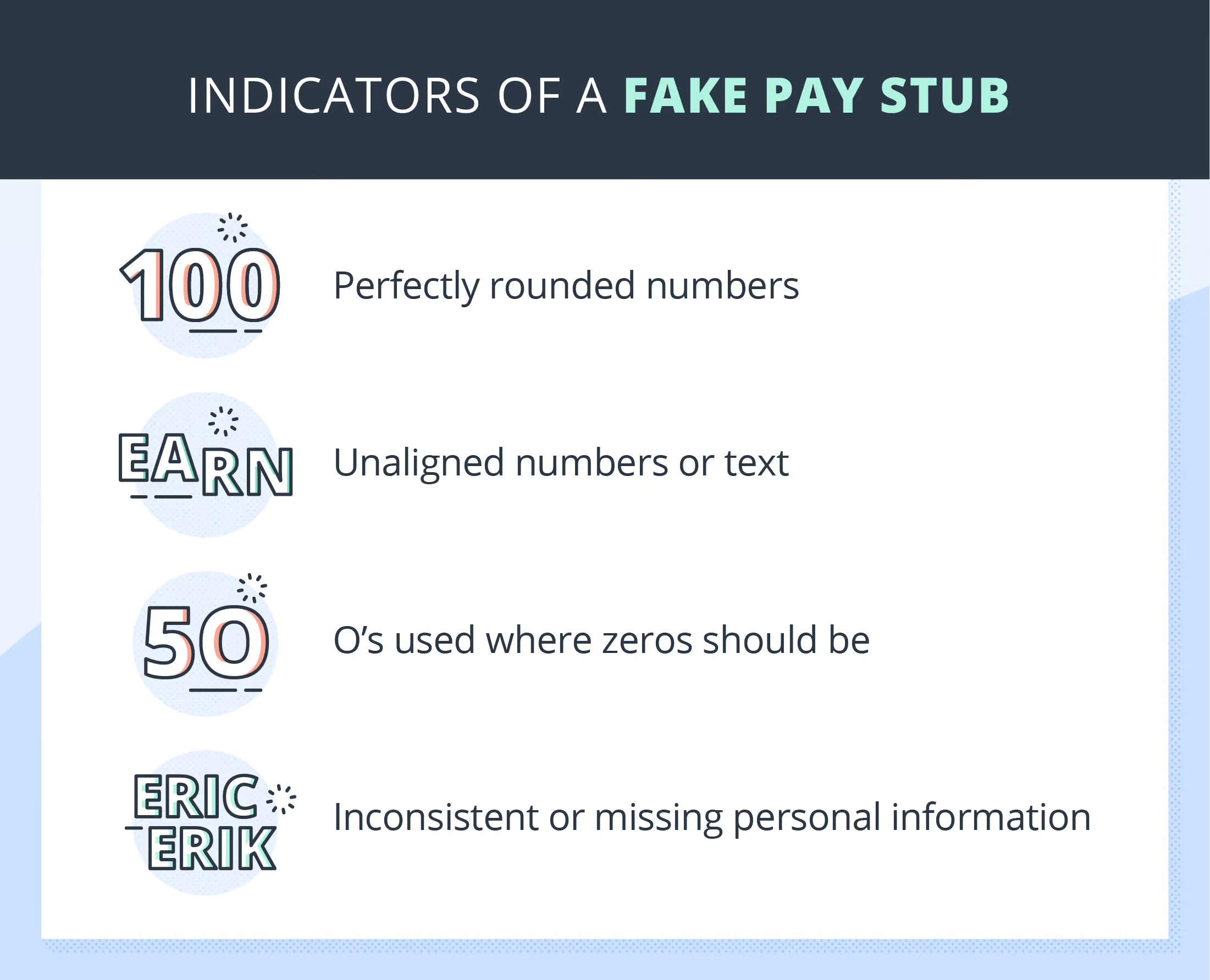
Pro Tip: Forged pay stubs are a popular method of rental application fraud. Scammers will alter the document to inflate the numbers. Don’t be fooled, follow these four tips to spot a fake pay stub:
Direct income verification provides a quick, paperless method for verifying a renter’s earnings. Instead of collecting multiple documents, landlords can securely review verified income information shared directly from an applicant’s bank account, without accessing any private details.
It’s especially helpful for landlords who want to:
This method gives landlords a clearer, faster picture of a renter’s financial reliability — no paperwork required.
An employment verification letter confirms that an applicant is currently employed and earning a steady income. Landlords can use this letter to verify the renter’s job stability and likelihood of continued earnings throughout the lease term.
The document should include the applicant’s job title, length of employment, and current salary or hourly wage. Renters can request one directly from their employer’s HR department or use a downloadable template to simplify the process.
The IRS Form 1040 includes a section where individuals can report their total annual income. It includes income from assets, salaried work, and freelance jobs. The 1040 form provides a complete and accurate snapshot of a renter’s income from all sources.
Applicants can contact the IRS to request a photocopy or a digital transcript of the form.
A Benefit Verification Letter is an official letter from the Social Security Administration (SSA). It lists the applicant’s monthly benefits income. Renters can use it to provide income earned through:
Applicants who suffer a work-related injury receive lost wages and medical benefits through workers’ compensation. They can provide landlords with a letter that outlines their wage replacement and payment details as proof of income.
While these letters indicate steady income for a brief period after the incident, the benefits eventually end. Since workers’ compensation funds may not cover the entire lease term, use other income verification methods to address potential gaps.
Commission-based earners, such as salespeople and real estate agents, can provide records of bonus or incentive payments to demonstrate their income. These statements show the commissions or performance-based pay they have earned over time.
Reviewing several months of records gives landlords a more accurate sense of whether the tenant’s income is consistent enough to meet rent obligations.
Lastly, landlords can accept unemployment statements as proof of income. Renters who are out of a job can submit an official statement from their state unemployment office. It will include the amount of unemployment funds the applicant receives, along with other details. Always verify the dates on the document to determine the duration of the benefits.
Make verifying income — and many other landlording tasks — easier by signing up for your free TurboTenant account today. With our Premium subscription, income verification is included with every screening report.
With those proof of income methods in mind, let’s take a bit further.
Unfortunately, it’s easier than ever to create fake income documentation online. Dishonest renters can produce falsified pay stubs or edit existing files to inflate their earnings. It only takes a few minutes, and free tools make it even easier.
Pro tip: Companies like Snappt are built to combat fraudulent income documentation. Snappt’s platform helps property managers lease with confidence by verifying applicant income and identity, detecting fraud, and enabling faster, smarter leasing decisions built on transparency and trust.
A thorough tenant screening process is a landlord’s best defense against rental application fraud, including forged income verification documents. Always pay close attention when reviewing applications and watch for red flags.
So, how many documents should you request to verify income? We recommend asking for two to three different types of verification. Depending on the monthly rent price, you may also want to request recent bank statements.
Here’s what makes sense for different types of applicants:
Employed renters:
Elderly or retired renters:
Injured workers:
Landlords, we recommend using the free proof-of-income letter template linked in the intro. You can download and share with applicants. Include this form along with the rest of the lease paperwork for your new tenants to sign. It’s a downloadable PDF format, so it’s easy to print and fill out.
Proof of income is one of the most essential parts of screening new tenants. By carefully reviewing documentation and staying alert to signs of fraud, landlords can make smarter, more confident leasing decisions.
For many landlords, a bank statement for rental verification remains one of the most reliable ways to confirm consistent income and financial responsibility.
However, modern insights, such as TurboTenant’s integration with Snappt, make it easier than ever to verify earnings securely and streamline the entire application process. It’s available in our comprehensive, yet affordable, Pro subscription.
Examples of proof of income include:
Yes, pay stubs are an excellent form of income verification.
The best options include official IRS forms (like W-2s and tax returns) and/or bank statements.
Disclaimer: This blog is for informational purposes only and is published by TurboTenant. It is not legal, financial, or tax advice. Laws and regulations for landlords vary by state and locality and may change over time. Always consult a qualified attorney, accountant, or local housing authority before making decisions related to your rental property. The publisher and authors assume no responsibility for actions taken based on the information provided.