







Even with the most detailed screening process, tenants may need to move out early. In that case, subleasing becomes a potential solution for both parties. Subleasing allows tenants to avoid breaking their rental agreement, even when the unexpected happens. As a landlord, subleasing your rental unit can help you avoid a vacancy, keep rent payments flowing, and maintain your original lease term.
We understand that it may be alarming to discover that a tenant needs to move out and is interested in subleasing the property, but don’t worry. We’re here to answer all of your questions so you can navigate the situation with the information you need.
Let’s review what a sublease is, the difference between subleasing and subletting, and the pros and cons for landlords. We’ve also answered common renter questions to ensure everyone’s on the same page. Let’s get started!
What is a Sublease?
A sublease is a new rental agreement established between a tenant and a new third-party renter. When the existing tenant rents out the property to a third-party, known as a subtenant or sublessee, a sublease agreement is created with the permission of the landlord.
Typically, the original tenant is responsible for finding a subtenant to assume the responsibilities outlined in the lease agreement, including making timely rent payments and maintaining the property. The subtenant either pays a portion of the original tenant’s rent amount or the full amount due, depending on the agreement.
These agreements don’t alter the original lease term established by the landlord and tenant. If the subtenant fails to live up to their end of the agreement, the landlord can hold the original tenant responsible.
Subletting vs. Subleasing
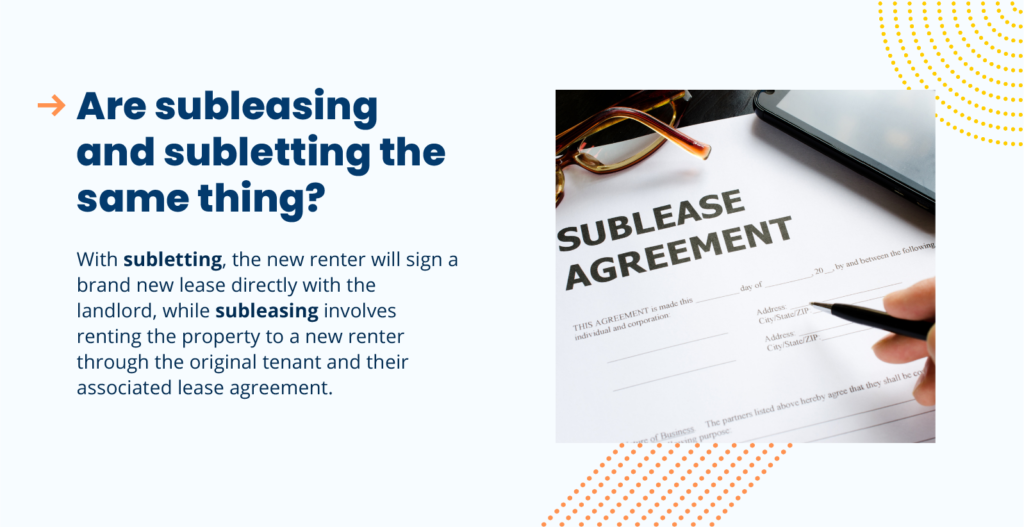
People sometimes use “subleasing” and “subletting” synonymously, but they’re not technically the same thing. Here’s what you need to know:
Subletting
When subletting, the new third-party renter signs a new lease (called a sublet agreement) with the landlord. In sublet situations, the new tenant is responsible for paying rent directly to the landlord.
Subleasing
In a sublease, the new third-party renter signs an agreement with the original tenant. When subleasing, the original tenant maintains their lease agreement. Subtenants are responsible for paying rent to the original tenant, who must collect it and distribute it to the landlord.
Pros and Cons for Landlords
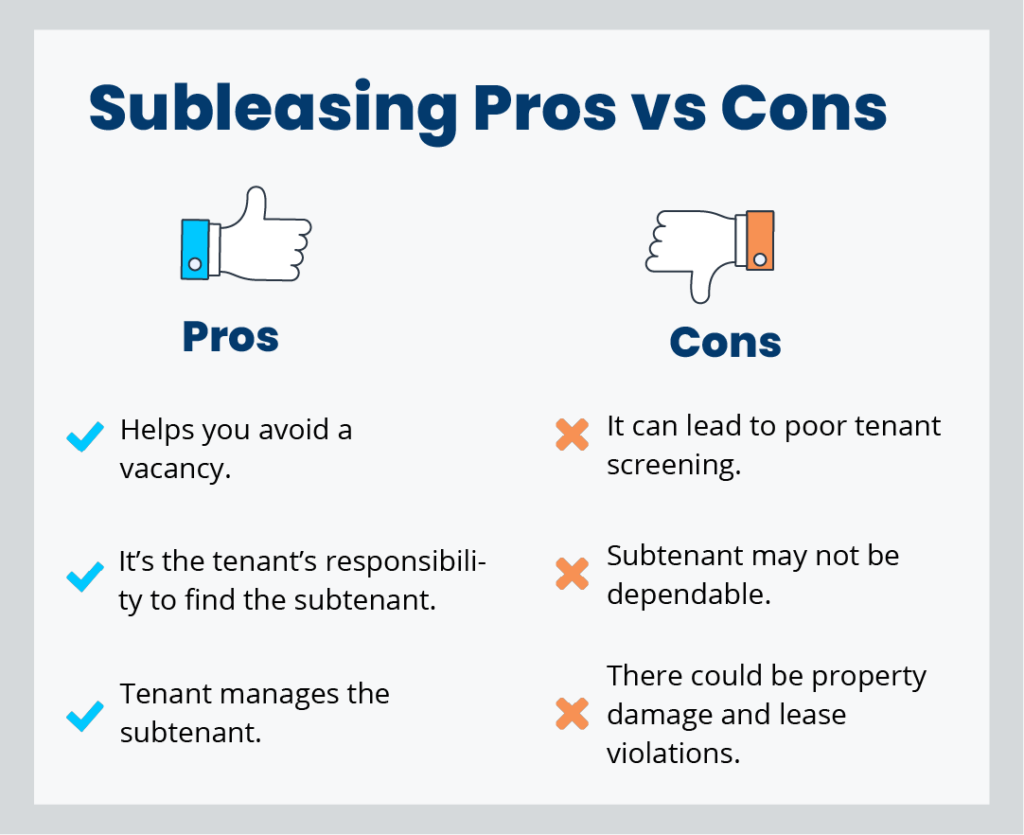
Here’s an overview of the benefits and drawbacks of subleasing for landlords.
Pros
Subleasing helps landlords avoid vacancies. If a tenant needs to move out early without opting for a sublease, they’d probably have to break their lease. That means an unexpected vacancy, which isn’t good news to landlords. Subleasing can help you avoid a vacancy and a gap in rental income.
Tenants are in charge of finding and managing the subtenant. In a sublease, the original tenant is responsible for finding a qualified subtenant, collecting rental payments, and dealing with property damage. In other words, less work for you!
Cons
Tenants might not follow proper screening protocols. Your tenant probably isn’t a seasoned landlord who’s a pro at tenant screening. Their primary concern is probably finding someone to cover their rent so they don’t have to break their lease. In other words, they may be less concerned with digging into the subtenant’s background and criminal history. If the tenant doesn’t use proper screening protocols, it could put your investment at risk.
There may be lease violations. Subtenants may feel a lack of responsibility since they’re not in a lease agreement with the landlord. From property damage to noise complaints or not paying rent, subtenants with bad behavior may require eviction.
Protecting Yourself Through a Sublease Clause & Tenant Screening
Even if you don’t want your tenants to sublease their rental, many states have landlord-tenant laws preventing landlords from stopping tenants from subleasing. However, landlords can take steps to protect their interests in these situations. Here’s how:
Add a sublease clause to your lease. Clauses should state:
- Tenants must obtain the landlord’s written permission before subleasing the property
- Tenants will be allowed to sublease if the terms are reasonable
- Landlord will screen the subtenant (specifying who will cover the screening fee)
- Subtenants are required to have renters’ insurance (if not covered by the original tenant’s policy)
- Short-term rental policy (Can they list on Airbnb or VRBO?)
- The landlord’s right to reject subtenants who don’t qualify
Always screen the subtenant. Even though your original tenant is responsible for finding the subtenant, you should still apply your usual screening process by:
- Setting financial criteria to make sure they can afford rent
- Conducting background, criminal, and eviction checks
- Meeting the applicant in person
Handle illegal sublease agreements. If a tenant subleases your unit without your permission, defer to the protocols outlined in your sublease clause. You may have the legal right to evict the tenant and subtenant and/or sue for any damages. We recommend checking your local laws and seeking legal counsel.
For Tenants: How to Sublease Your Rental
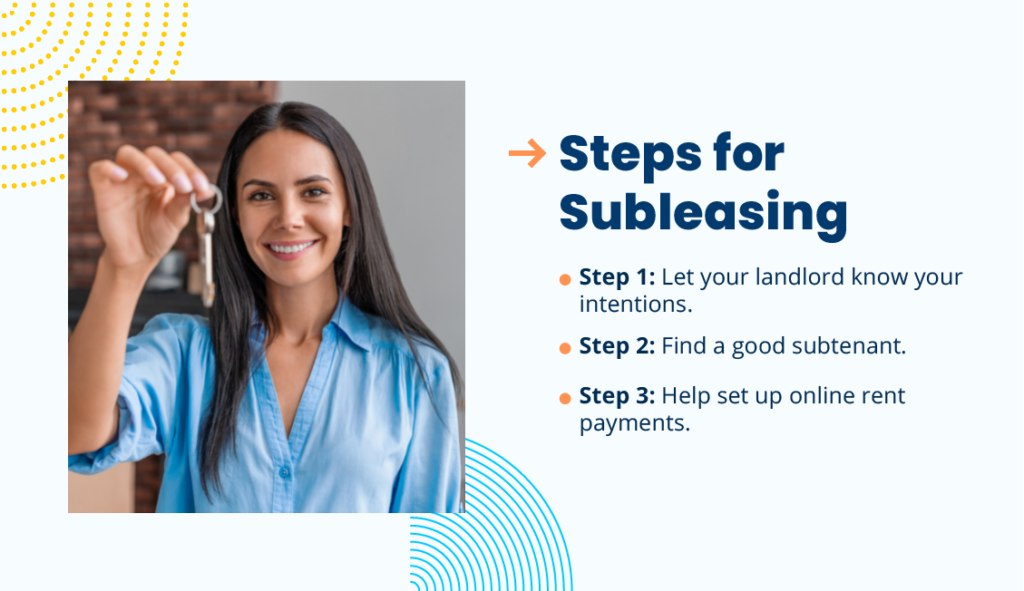
Tenants, this section is for you. If you need to sublease the unit you’re renting, you’ll act as a middleman between the landlord and subtenant. That makes you responsible for locating the subtenant, collecting rent, reporting maintenance issues, and complying with all terms of the lease agreement.
These are four steps to a successful subleasing process:
- Let your landlord know you’re looking to sublease
- Find a qualifying subtenant
- Sign an agreement once the landlord approves the subtenant
- Help the subtenant set up online rental payments so they can send the rent directly to the landlord
Remember: if the subtenant fails to pay rent, you must cover the unpaid balances.
Not sure you’re ready to take on these responsibilities? In this case, breaking your lease may be a better solution for all parties. Landlords may also opt to sublet the unit by signing a brand-new lease with a subtenant.
Disclaimer: This blog is for informational purposes only and is published by TurboTenant. It is not legal, financial, or tax advice. Laws and regulations for landlords vary by state and locality and may change over time. Always consult a qualified attorney, accountant, or local housing authority before making decisions related to your rental property. The publisher and authors assume no responsibility for actions taken based on the information provided.
Subleasing FAQs
What happens if the subtenant does not pay rent?
The original tenant is responsible for the monthly rent. Landlords should remind tenants of this responsibility before they consider subleasing.
What if your tenant wants to use your rental property as an Airbnb?
If your tenant wants to list your unit on Airbnb or VRBO, they’ll need to ask your permission first. If you’re unaware, this is called rental arbitrage. Landlords who don’t want tenants using their properties as short-term rentals must add a clause to their lease agreement banning it.
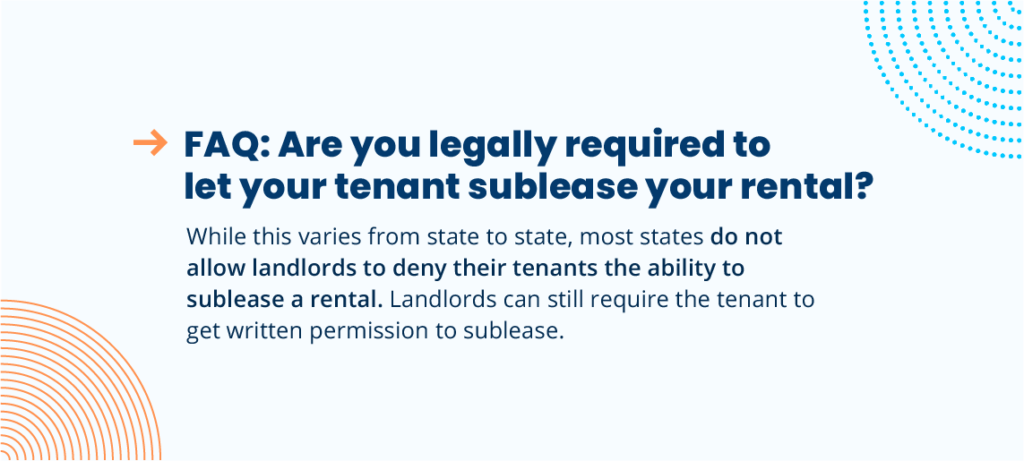
Are you legally required to allow your tenant to sublease your rental?
Since landlord-tenant laws vary, it depends on the location of your property. However, most states do not allow landlords to deny their tenants’ ability to sublease a rental unit.
Who needs to sign a sublease agreement?
The original tenant and subtenant must sign the agreement. In some cases, the property’s landlord may also sign.