


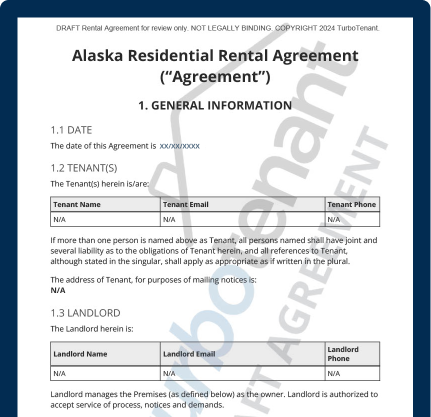

From the bustling neighborhoods of Anchorage to small towns along the coast and interior, shared housing is a big part of Alaska’s rental market. An Alaska room rental lease agreement puts expectations in writing, outlining responsibilities for rent, utilities, and house rules while helping landlords and tenants avoid disputes and stay compliant with state law.
In this TurboTenant guide, we’ll explain what you need to know about creating an agreement, including required disclosures, security deposit laws, rent payment rules, and how to end or renew an agreement. You’ll also learn how to generate a printable form tailored to your home.
Navigate Alaska Leases

Room Rental Agreement Alaska
Current PageRent your spare room with a Alaska room rental agreement today.
Alaska Residential Lease Agreement
Learn MoreCreate a compliant Alaska lease agreement in 15 minutes with TurboTenant's rental contract builder.
Alaska Month-to-Month Lease Agreement
Learn MoreCreate your Alaska month-to-month lease agreement in 15 minutes or less.
Types of Room Rental Contracts
Finding the right rental situation in Alaska often comes down to clarity. Whether you’re a landlord renting out part of your home or roommates moving in together, putting expectations in writing helps prevent confusion and costly disputes.
Room rental agreement: These agreements establish a direct landlord-tenant contract for tenants to rent a single bedroom in a shared home. It should include:
- Rent amount and due date
- Utility responsibilities
- Security deposit terms
- Maintenance obligations
- House rules for shared areas like the kitchen, bathroom, or living room
Under Alaska law, landlords can collect a security deposit of up to 2 months’ rent (or 3 months for furnished units). They must place the deposit in a trust account and return it within 14 days if the tenant leaves without damages or unpaid rent. If deductions are necessary, landlords have 30 days to provide an itemized statement and return the balance (AS 34.03.070).
Roommate agreement:A roommate agreement is a contract among cotenants in the same unit, separate from the landlord’s lease. It typically covers:
- How cotenants split utilities and rent
- Division of chores and household responsibilities
- Rules for guests, noise, or shared spaces
While not enforceable under Alaska’s landlord-tenant statutes in the same way as a lease, a written agreement provides everyone with a clear reference point and can help reduce tension. It should never override or conflict with the main lease agreement.
By addressing these details upfront, both landlords and tenants establish a solid foundation for their rental situations.
Rental Agreement Breaches
Even with a written lease in place, issues can pop up. Thankfully, Alaska law outlines specific steps landlords must follow when rent goes unpaid, lease terms are broken, or a tenant abandons the property. By following these rules, you can avoid disputes and ensure any eviction action stands up in court.
Failure to pay: If rent is past due, the landlord may serve a 7-day written notice demanding payment in full. If the tenant pays within this period, the tenancy continues. If the tenant fails to pay, the landlord may terminate the agreement and initiate eviction proceedings. A landlord may accept partial payment and extend the deadline in writing, but the law only requires one written notice for each default (AS 34.03.220(b)).
Lease violations:
- Substantial damage or illegal activity: If the tenant deliberately causes over $400 in damage or permits unlawful activity on the premises, the landlord may issue a 24-hour to 5-day Notice to Quit (AS 34.03.220(a)(1)).
- Other material noncompliance: For health, safety, or other serious lease violations, such as unauthorized occupants or pets, the landlord must issue a 10-day Notice to Remedy the issue or vacate the premises. If the tenant corrects the violation within the specified time, the lease remains in effect. If the same violation recurs within 6 months without due care, the landlord may terminate with at least 5 days’ notice (AS 34.03.220(a)(2)).
Lease abandonment: If a tenant is absent from the unit for 7 consecutive days without notice, is behind on rent, and has left belongings behind, the law considers the unit abandoned. The landlord may retake possession and must make a good-faith effort to re-rent the unit. The tenant remains responsible for rent until the lease ends or the unit is re-rented, whichever comes first. Landlords must store abandoned belongings and provide at least 15 days’ written notice before disposal or sale (AS 34.03.230(c), 34.03.260, 34.03.360).
Self-help evictions: Alaska law prohibits landlords from using “self-help” methods such as changing the locks, shutting off utilities, or removing a tenant’s belongings to force them out. All evictions must go through the court system. A landlord who attempts a self-help eviction may be liable for damages and penalties.
Clear rules around breaches protect both sides. Landlords have a legal process to regain possession of their property, while tenants are entitled to notice and an opportunity to rectify issues before eviction proceedings begin.
Room Rental Landlord Access Laws
Even when tenants share a property with a live-in landlord, they still have the right to privacy. Alaska law sets clear limits on when and how a landlord may enter a rental unit. The goal of each law is to balance the tenant’s right to quiet enjoyment with the landlord’s responsibility to maintain the property.
Immediate access: A landlord may enter a rental unit without the tenant’s consent only in emergencies that threaten life or property, such as a fire, flooding, or a suspected gas leak (AS 34.03.140(a)).
Landlord harassment: Alaska law protects tenants’ right to quiet enjoyment of their home. Landlords cannot abuse their right of entry or use it to harass, intimidate, or repeatedly disrupt tenants. Entry must always serve a valid purpose, such as maintenance or inspections, and landlords may not use it as a form of pressure or retaliation (AS 34.03.140(b)).
Advance notice: For non-emergency entry, landlords must give at least 24 hours’ notice and may only enter at reasonable times. Some valid reasons could include repairs, inspections, or showing the unit to prospective renters or buyers. The tenant cannot unreasonably withhold consent; however, the landlord must always provide proper notice and act in good faith (AS 34.03.140(a)–(c)).
By clearly defining these boundaries, Alaska law ensures that landlords can maintain their property while tenants feel secure in the privacy of their homes.
Create Your Alaska Room Rental (Roommate) Agreement
TurboTenant makes it easy to draft an Alaska room rental agreement that complies with state law. In just a few minutes, you can generate a printable PDF form, customize terms for your property, share the agreement online, and complete it securely with e-signatures, all in one place.