


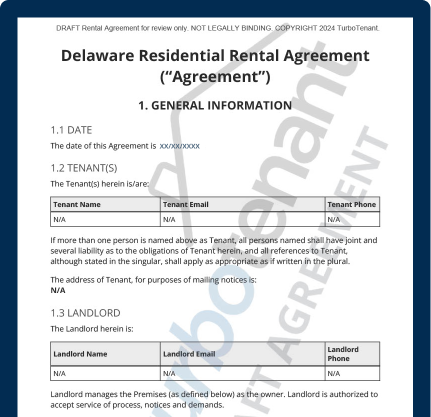

A Delaware month-to-month lease agreement gives you flexibility with your rental, but that doesn’t mean it can be vague. Whether you are renting out a beach bungalow in Rehoboth or a spare room in Wilmington, having a solid rental agreement in place protects you, your investment, and your peace of mind.
Navigate Delaware Leases

Delaware Month-to-Month Rental Agreement
Current PageGet the flexibility you need with a Delaware month-to-month lease agreement.
Delaware Residential Lease Agreement
Learn MoreCreate a compliant Delaware lease agreement in 15 minutes with TurboTenant's rental contract builder.
Room Rental Agreement Delaware
Learn MoreConsidering renting out your spare room? Make it official with a Delaware room rental agreement.
Required Landlord Disclosures (5)
Delaware law requires that a landlord disclose certain information to their tenant-at-will when signing a rental agreement:
- Lead-based paint: Federal law requires that landlords disclose the known presence of lead-based paint or lead-based paint hazards for any home built before 1978.
- Owner Disclosure: All Delaware lease agreements must include the property owner or landlord’s information, including name and address (§ 5105(a)).
- Landlord-Tenant Code: At the start of the lease, the landlord must provide the tenant with a summary of the landlord-tenant code (§ 5118).
- Bed Bugs: Landlords must closely inspect the property for bedbugs and give notice if any are found, including steps taken for remediation and to help prevent them in the future (§ 5317).
- Legal Representation: If a tenant’s income is less than 200% of the federal poverty guidelines, they may be entitled to legal representation in an eviction case in certain instances (§ 5602).
TurboTenant includes all of these required disclosures with every lease agreement.
Required Notice to Terminate Month-to-Month Agreement
Each state has its own rules for what is required to terminate a month-to-month rental agreement. In Delaware, landlords and tenants can terminate this type of agreement with sufficient notice. Here’s what you need to know:
Required notice for landlord: Landlords must give 60 days’ written notice (§§ 5106, 5107).
Required notice for tenant: Tenants must give 60 days’ written notice (§§ 5106, 5107).
The required 60 days’ notice begins on the first day of the month following the day of notice.
Rent Increase Laws
With a Delaware month-to-month lease agreement, landlords typically have more flexibility in rental terms, but they must still comply with all state and local laws regarding rent increases.
Rent control and rent stabilization do not exist in Delaware, meaning that there are no laws limiting how often landlords can raise rent or by how much. Landlords in Delaware may increase the rent under a month-to-month rental agreement to any amount for any reason, provided they give 60 days’ notice. The tenant has 15 days to object; otherwise, the rent increase goes into effect on the date outlined in the notice (§§ 5107).
Create Your Delaware Month-to-Month Lease Agreement
Ready to make a Delaware month-to-month lease agreement? Get it in record time with TurboTenant’s lease agreement builder. With it, you can apply the relevant laws to your agreement — no lawyer required.