



From historic row houses in Capitol Hill to apartments in Columbia Heights, a room rental lease agreement helps make any shared home feel more predictable by establishing clear expectations that protect both landlords and tenants under local laws. Maybe you’re looking to offset your mortgage in one of the city’s high-cost neighborhoods, or you’re a tenant looking for a more affordable way to live in the District. Regardless of your reasons, these Washington, D.C., lease agreements offer a straightforward framework.
Navigate Washington, D.C. Leases

Room Rental Agreement Washington, D.C.
Current PageWant to rent out an extra room? Make it official with a Washington, D.C. room rental agreement.
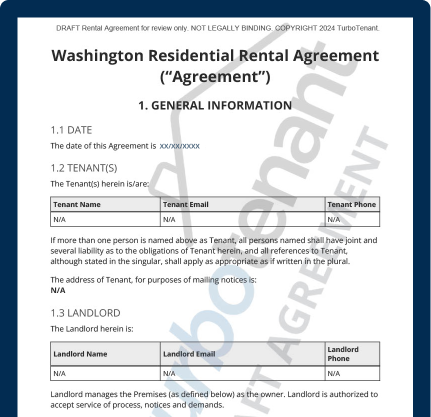
Washington, D.C. Residential Lease Agreement
Learn MoreCreate a compliant Washington, D.C. residential lease agreement in 15 minutes with TurboTenant's rental contract builder.
Washington, D.C. Month-to-Month Lease Agreement
Learn MoreBuild your Washington, D.C., month-to-month lease agreement in just 15 minutes.
Types of Room Rental Agreements
- Room rental agreement: A legally binding contract between a live-in landlord and a tenant outlining the terms and conditions of renting the room.
- Roommate agreement: An agreement, typically non-legally binding, between co-tenants that guides the responsibilities of each party.
Breaching Contract
Failure to pay: If a tenant doesn’t pay rent on time, even after the 5-day grace period, that’s considered a breach of the lease. In Washington, D.C., you can initiate the eviction process if rent remains unpaid; however, you must follow the formal legal steps.
Lease violations: Breaches aren’t just about unpaid rent. Tenants may violate the lease by having unauthorized occupants, damaging the property beyond normal wear and tear, or failing to comply with house rules. Ensure that these expectations are clearly outlined in your agreement and address any issues in writing before taking further action.
Lease abandonment: If a tenant moves out without notice or stops responding, you can’t simply assume they’ve abandoned the unit. The local law generally requires you to take reasonable steps to determine abandonment before reclaiming the space or renting it to someone else.
Self-help evictions: It’s illegal to use “self-help” methods, such as changing the locks, shutting off utilities, or removing a tenant’s belongings, to force them out. All evictions must go through the court system to protect both the landlord’s and tenant’s rights.
Landlord Room Access Laws
Immediate access: In emergencies, such as fires, floods, or severe disasters, you may legally enter the rented room without notice.
Landlord harassment: It’s illegal in D.C. to harass tenants by repeatedly entering without permission or showing up unexpectedly to pressure them to leave.
Advance notice: For non-emergency visits, such as inspections, repairs, or showings, you must give at least 24 hours’ written notice. Although the law doesn’t specify an exact timeframe, 24 hours is widely accepted as a reasonable timeframe.
Create Your Washington, D.C. Room Rental Agreement
A Washington, D.C. TurboTenant room rental agreement brings structure to shared housing. It clarifies rent terms, house rules, and tenant responsibilities to support a respectful and legally sound living environment.