




Just the idea of becoming a landlord in California can feel overwhelming, let alone taking the plunge. And with some negative landlord stereotypes floating around, it’s easy to understand the hesitation. But rest easy: Landlording doesn’t have to be complicated. In fact, property management software can help California landlords perform their duties with minimal overhead.
Whether marketing rental properties, receiving rental applications, screening prospective tenants, or drafting legally sound lease agreements, landlords have a lot to do. With helpful information and powerful software tools, finding ways to streamline your day-to-day has never been easier.
In this guide, we’ll break down everything you need to know to successfully manage your rental and become an effective landlord in the Golden State. Whether you’re diving into real estate investing with purpose or becoming a landlord by chance, we’re glad you found us.
Marketing. Applications. Leases. Payments.
Research the Market
Before diving headfirst into renting out your property, it’s critical to understand your existing and potential rental markets.
You may already have your finger on the pulse of local real estate trends and rental conditions, or perhaps you’re starting entirely from scratch. Regardless of where you stand, remember these three words: Know. Your. Market.
Having a real sense of the rental market, especially in a place as big and diverse as California, is the first step to putting you on the path to landlord greatness. When studying markets, pay close attention to:
- Job availability
- Population growth
- Economic stability
- Real estate trends
- Inventory levels
- Neighborhood quality
- Affordability
- Tenant demand
- Future development plans
- Proximity to transportation, shopping, and entertainment
- Licensing requirements
The above list isn’t exhaustive, so get creative with your research. Or better yet, check out our handy guide on the Best Rental Markets in California. Regardless of how you approach this step, conducting thorough market research is the first step towards profitability.
A good place to start is with our Rent Estimate Calculator. By utilizing this free tool, you can estimate (within reason) approximately how much rental income your property could generate. Of course, markets are constantly evolving, and setting the ideal rent based on the specific unit can be subjective, so take all numbers at face value.
Do Some Math
To continue your research, it’s time to dive deeper into the numbers. But fear not, because understanding the true financial landscape will bring clarity to your potential earnings, property costs, and overall financial expectations as you continue your California landlording journey.
Begin by asking yourself a few key questions about your property. You’re only answering to yourself here, so it pays to answer truthfully:
- Will the property need significant renovations to become rentable?
- What recurring expenses will you face (California property taxes, maintenance)?
- Is the property’s location desirable enough to attract consistent and high-quality renters?
-
- Can you comfortably cover mortgage payments if the property sits vacant for any length of time?
- What’s the maximum amount of time the property could sit vacant until you’d have to consider selling?
After answering these questions, dig into the following critical metrics when analyzing your existing or future properties:
NOI: Net Operating Income measures property profitability after expenses, highlighting your true income-earning potential.
Cap rate: The capitalization rate reveals the investment return based on property price and NOI, indicating market competitiveness and property value.
ROI: Return on Investment shows the overall returns compared to your initial investment, helping to clarify whether your property generates a sufficient profit.
Rent-to-income ratio: This essential metric measures tenant affordability by comparing rent to their monthly income. Maintaining a healthy rent-to-income ratio helps ensure you have steady and reliable tenants. This metric is market-dependent, so pay close attention to what the numbers indicate.
Cash flow: Another key statistic to consider is cash flow. It calculates monthly profitability after expenses. Positive cash flow indicates a healthy and sustainable rental business.
Rental yield: To calculate rental yield, take a property’s annual rental income and divide it by the property value or purchase price. A high rental yield typically equates to more substantial returns.
Crunching numbers to shed more light on your rental properties doesn’t have to be intimidating. TurboTenant offers easy-to-use calculators for many of these essential metrics. Try them for free to gain more financial clarity.
Read Up On Local Landlord-Tenant Law
 In addition to federal landlord-tenant laws, such as the Fair Housing Act, ADA, Fair Credit Reporting Act, and Servicemembers Civil Relief Act, landlords must also understand California-specific laws to remain legally compliant and protect their investments.
California is heavily regulated, so set aside some time to review our comprehensive California landlord-tenant law guide. We update it as laws change and run it by our in-house legal team to keep you informed about the laws you need to understand.
Below is an overview of some essential California landlord-tenant laws to consider as you navigate your landlording journey. Although these laws are accurate statewide, it is necessary to note that local jurisdictions may occasionally enact regulations that supersede state legislation. Reference local ordinances to ensure you understand laws on a local level.
Security deposit rules: As of July 1, 2024, California security deposit law stipulates that you can charge up to 1 month’s rent for a security deposit unless the unit is furnished, in which case you can charge up to 2 months’ rent. Landlords are not required to keep deposits in interest-bearing accounts or disclose to their tenants the location of the funds (Cal. Civ. Code § 1950.5).
Entry requirements: California landlords must give tenants at least 24 hours’ written notice before entering a rental unit. Entry must occur during reasonable hours and should be for legitimate reasons, such as repairs, inspections, or showings, except in cases of emergency (Cal. Civ. Code § 1954a).
Eviction laws: Landlords must provide proper written notice before initiating the eviction process in California. Valid reasons for eviction include non-payment of rent, lease violations, illegal activities, and other similar grounds. Evictions must be processed and run through the government’s procedures. A landlord should never attempt to evict tenants through self-help measures (Cal. Civ. Code §§ 1946.2, 1161).
Rent control: The Tenant Protection Act of 2019 codifies California’s rent control laws. It caps annual rent increases at 5% plus inflation, up to a maximum of 10% (Cal. Civ. Code §§ 1946.2, 1947.12). Keep in mind that some cities, such as Los Angeles and San Francisco, have stricter rent control guidelines that landlords must follow carefully.
Lease breaking: Tenants can legally break a lease in California under specific circumstances. Reasons include:
- Landlord harassment.
- Domestic violence.
- Habitability breaches.
- Military deployment.
For a full breakdown, check out the above-linked article.
Review Relevant City-Level Landlord-Tenant Laws
As stated above, some local jurisdictions maintain nuanced versions of rental laws that are unique to their area and address local needs. Here’s a selection from a few spots throughout the state:
Los Angeles
As the second-largest city in the country, it’s no wonder it passed laws to address the unique needs of such a massive metropolis. At the city-level, LA added protected classes to its interpretation of the Fair Housing Act, including:
- Age
- Student status
- HIV/AIDs diagnosis
- Sexual orientation
Additionally, Los Angeles rent control differs from how the state implements the policy. The city passed the Rent Stabilization Ordinance, which dictates that all units built before October 1, 1978, must register their buildings with the city. Additionally, rent increases are capped at the Consumer Price Index (CPI), plus 1% if the landlord provides gas and electricity.
For the period July 1, 2025, until June 30, 2026, rent increases are capped at 3%.
San Francisco
Like Los Angeles, San Francisco has enacted its own policies around rent control, rather than adhering to the state’s methodology. However, unlike LA, the Rent Control Board in San Francisco determines the allowable rent increase amount each year.
Most single-family homes are not rent-controlled, and landlords who make significant capital improvements to rent-controlled properties can opt out of the restrictions. For the period from March 1, 2025, through February 28, 2026, the allowable rent increase rate for rent-controlled units is 1.4%.
Additionally, while at the state level, California landlords are not required to pay tenants interest on their security deposits. However, San Francisco law requires it. Landlords must pay their tenants interest on every security deposit that’s held for over 1 year.
Santa Monica
Santa Monica takes an active role in developing its own set of rental laws that meet the needs of its residents. While some guidelines align with their state counterparts, others deviate significantly from what Sacramento has mandated.
While California forbids landlords from harassing tenants, Santa Monica has dramatically strengthened the penalties and classification for what constitutes landlord harassment. The city added discrimination based on:
- Housing status.
- Bad-faith refusal to accept a rent payment.
- Excessive rent increases.
- Repeated buyout offers after refusing a previous buyout in writing.
These actions all constitute landlord harassment in the City of Santa Monica. Violating this policy can result in the tenant having the right to collect up to $10,000 per violation against the landlord.
Use Property Management Software
 Once you’ve crunched the numbers, read up on landlord-tenant law, and are ready to become a proper landlord, it’s time to roll up your sleeves and get to work. You’re not on your own. Enter property management software.
Landlord software centralizes all your responsibilities, including:
- Property marketing.
- Rental applications
- Lease generation
- Maintenance tracking.
- Rent collection.
- Financial tracking.
- Tenant communication.
TurboTenant helps you automate processes, reduce errors, stay legal, and save valuable time. You can go from new landlord to pro with your free account.
In the following section, we’ll outline some of a landlord’s most essential duties and demonstrate how property management software can help customers streamline them all.
Market Your Properties
A property owner isn’t a landlord unless they have renters filling their units. And the only way to find renters to fill your units is to let them know your unit exists! Marketing your property with a compelling and attractive listing to maximize exposure, attract quality leads, and fill vacancies.
Since you’ve already conducted your market research, you have everything you need to set your rent price. Next, capture high-quality photos and videos, and write engaging copy that showcases your property’s best features. Other landlords are your direct competitors, so take your time with this process. (It’s not a bad idea to take a look at other listings to see what does and doesn’t work for other landlords.)
TurboTenant takes the guesswork out of advertising rental property. With a powerful AI assistant, you can instantly generate rental listings, add pre-screening questions, and automatically syndicate your property listings across dozens of popular rental sites.
Did we mention this service comes standard with all free accounts?
Collect Rental Applications Digitally
Once your top-notch property listings have attracted a multitude of candidates, it’s time to get to know them. Specifically, you want to understand their employment history, rental background, income, and creditworthiness to ensure they’ll be reliable tenants.
Because TurboTenant provides landlords with free rental applications (the applicant pays all tenant screening fees), all of the necessary information is collected in one place, saving you time from having to sift through stacks and stacks of paper applications. Sign up for your free account, customize your digital rental application, enter your applicant’s contact information, and let our software handle the rest.
You can rest easy knowing that every question in your digital rental application fully complies with federal and California state screening laws. Not to mention, Rent Butter (or screening partner) will directly charge applicants the screening fee while you pay nothing out of pocket. If your rental market is highly competitive, you can cover it yourself, which could be an attractive perk for high-quality applicants.
Use a Legally Compliant Lease
As you screen your pool of applicants, your dream candidate will hopefully be apparent. In an ideal world, they have a great credit score, sterling landlord references, a clean criminal history, and a steady income to boot.
Once you’ve selected your next tenant (making sure you’ve followed all Fair Housing Act guidelines in the process, of course), you’ll need to draft an iron-clad California lease agreement. A lease is essential for protecting your investment because it sets clear expectations between both parties and serves as the basis of the rental relationship.
Would hiring a lawyer to create a customized, legally-compliant lease get the job done? Yes, but lawyers are costly and often very busy. Instead, utilize property management software to create a state-specific rental contract on your behalf in just 15 minutes or less.
With TurboTenant’s Premium Plan, you can create unlimited lease agreements for less than the cost of a lawyer — and all without having to leave your desk.
Lock Down Maintenance Requests
After handing over the keys to your tenants, the last thing you want to think about is the looming threat of a necessary repair. But even with diligent upkeep, it’s impossible to escape the inevitable eventuality of maintenance requests.
It’s your legal obligation to perform timely repairs, after all. In fact, in most states, if a landlord fails to maintain basic habitability standards for tenants, they breach their own rental contract and the law (and risking legal and financial consequences as a result). In California, failure to maintain a habitable unit is enough grounds to enable a tenant to cancel the lease without penalty, leaving you with a massive repair bill and a vacant unit.
Property management software helps you to stay on top of maintenance requests. With it, tenants can submit issues to you directly from their phone, providing all the relevant details, so you always know the current status of your property.
Collect Rent Online
Rent is the literal lifeblood of your rental property business. Without steady rent payments from your tenants, your investment stalls, cash flows dry up, and your ability to grow your portfolio takes a significant hit.
How can you make sending and receiving rent easier? By allowing your tenants to make digital online payments, of course. Landlords who accept automatic online rent payments are five times more likely to receive payments on time than those relying on cash or checks. And tenants love having flexible payment options that suit their lifestyle.
While collecting rent through Zelle, Venmo, CashApp, or direct bank transfers is a serviceable option, property management software provides a more seamless and functional experience, offering higher send and receive limits. Set up recurring rent payments, send reminders, and track every dollar automatically, all with TurboTenant.
Streamline Rental Property Accounting
In the simplest terms, real estate investing is a money-in, money-out proposition. To ensure most of it is flowing in and that you’re on top of it when more of it is flowing out, landlords must track every cent of revenue and expenses.
Thoughtful and consistent rental property accounting isn’t just about watching the numbers tick up or down; it’s about managing your business in a way that when disaster strikes, like a dreaded IRS audit, your bookkeeping is accurate and airtight.
While fussing with QuickBooks and juggling spreadsheets may do the job for many real estate investors, accounting software typically doesn’t cater its features to landlords.
TurboTenant Accounting is the most practical way for you to handle your rental accounting. With its intuitive interface, you can automatically track cash flow, expenses, and income. With that information, landlords can quickly produce profit and loss statements and balance sheets for up-to-date financial analysis.
TurboTenant Makes DIY Landlording Easy
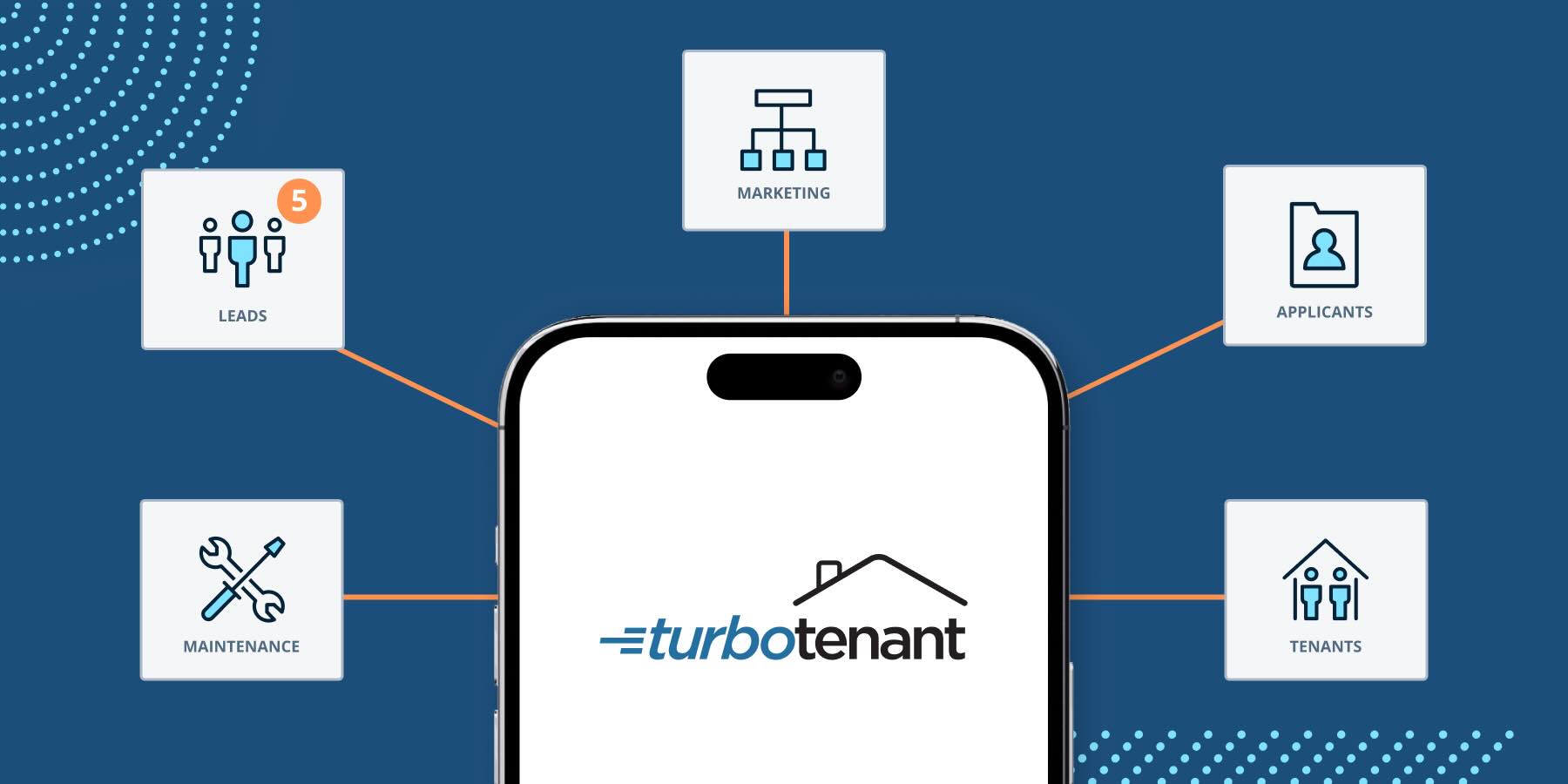
Being a landlord in California may come with its fair share of responsibilities, but with the right tools, you’ll be a pro in no time. By streamlining and automating your most essential duties with property management software, success is all but guaranteed.
TurboTenant’s all-in-one landlord software can help you streamline every step of the rental process. We’ve got you covered from property marketing, tenant screening, state-specific lease generation, maintenance coordination, rent collection, and more.
Sign up for a free TurboTenant account today to start your California landlording journey on the right foot.