







Most landlords have met a tenant who looked great on paper but quickly became a source of stress. From late rent to property damage, even minor issues can add up fast. That’s why tenant background checks are so necessary. They help you spot red flags early, verify what applicants tell you, and find renters who will treat your property like their own.
In this guide, we’ll break down what’s included in a background check, how to read the results, and how credit reports fit into a well-rounded tenant screening process.
By the end, you’ll know exactly how to use this information to protect your investment and your peace of mind.
Streamline Your Rental Property Management
Marketing. Applications. Leases. Payments.
What are tenant background checks?
A tenant background check is one of the most important tools property owners have for screening applicants. When someone applies to rent your property, this check reveals key details about their past (including their financial reliability and any criminal history if your state allows you to see it) so you can make informed decisions with confidence.
These reports typically combine information from credit bureaus and government databases to give landlords a fuller picture of each applicant. The goal is simple: to confirm that a potential tenant is responsible, trustworthy, and likely to care for your property.
How does a background check work?
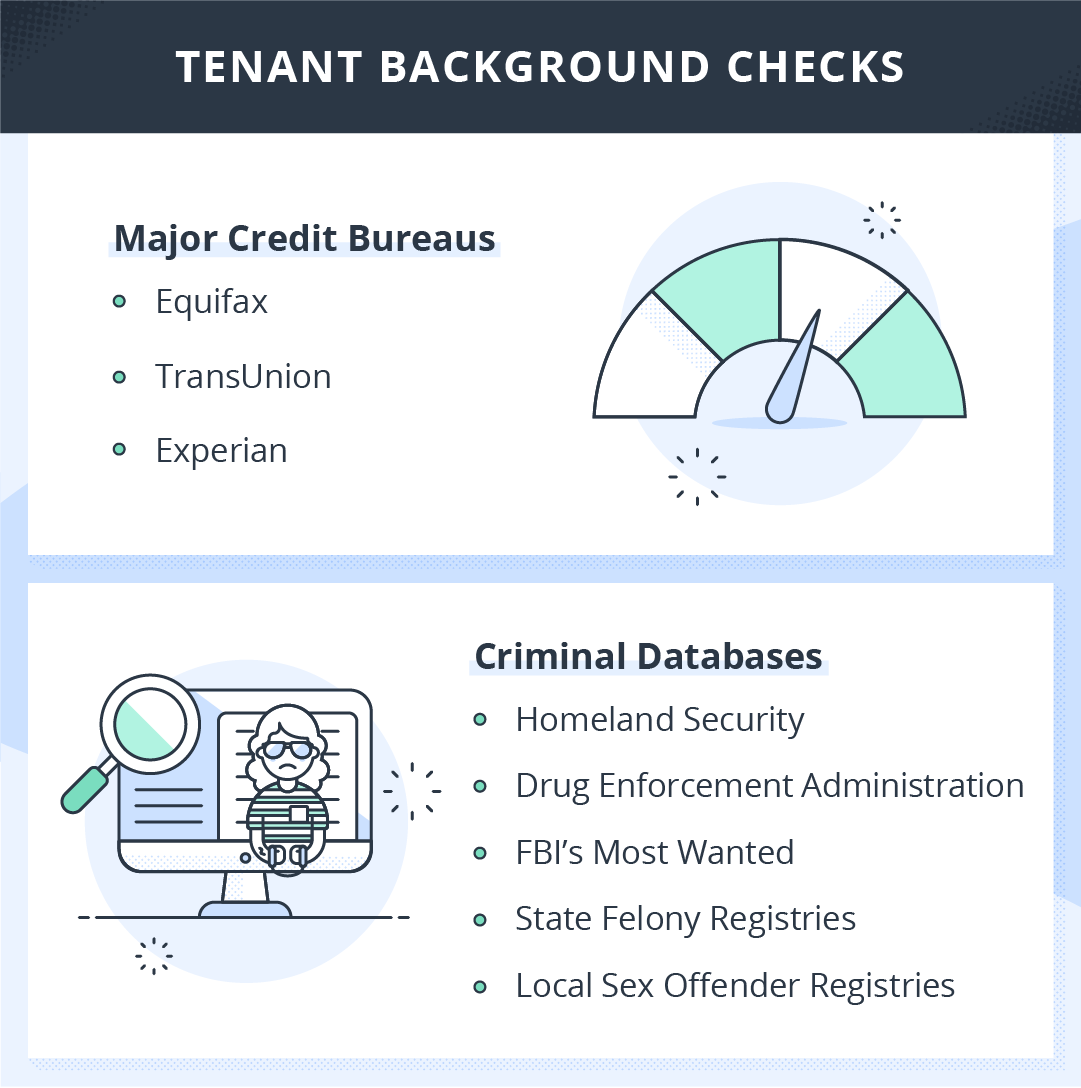
After a renter applies, you’ll need their consent to run a credit and background check. The process uses details from the rental application, like a renter’s date of birth, Social Security number, and previous addresses, to verify their identity and gather background data.
Most screening tools pull information from the three major credit bureaus (Experian, Equifax, and TransUnion) and cross-check it against federal and state criminal databases. Within minutes, you’ll have a clear, organized report that helps you evaluate whether an applicant meets your standards.
What are the benefits of a tenant background check for landlords?
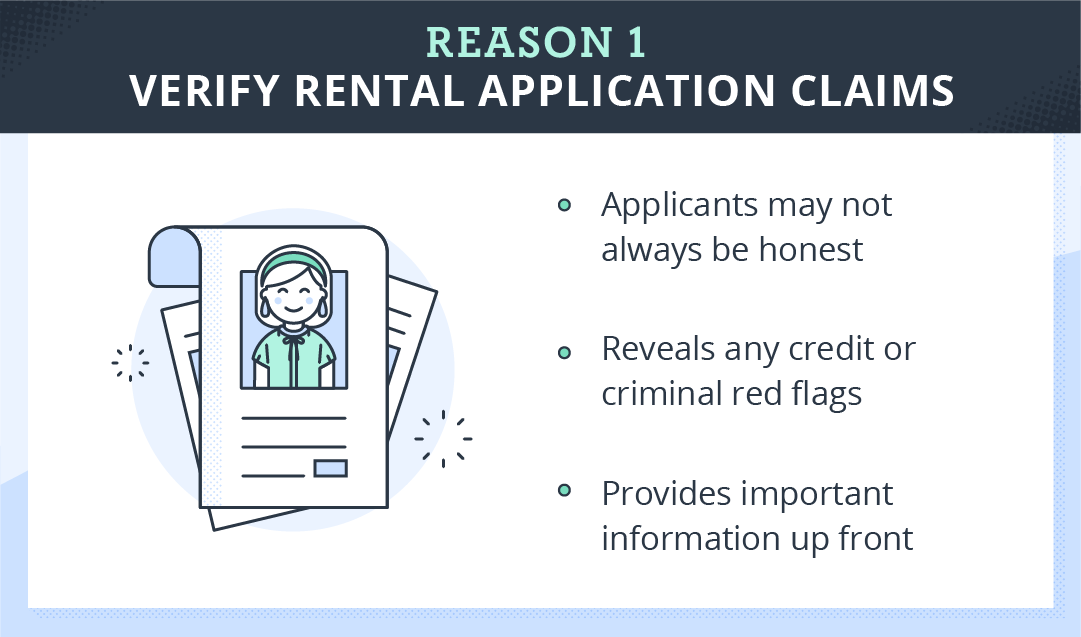
Running a tenant background report does more than confirm what’s on an application. It gives you a fuller picture of who you’re renting to and helps you make decisions that protect your property and your peace of mind.
When used as part of a complete screening process, they can help you:
1. Identifying Red Flags
First and foremost, landlords conduct background checks to protect their investment. They use background reports to uncover any potential concerns about a renter. Most rental application forms ask applicants to disclose things about their criminal and credit history. However, many applicants may not be sincere.
To separate fact from fiction, landlords use this vetting process to verify the information on a rental application and fill in any gaps the applicant may have left or purposefully excluded.
2. Defending Against Lawsuits
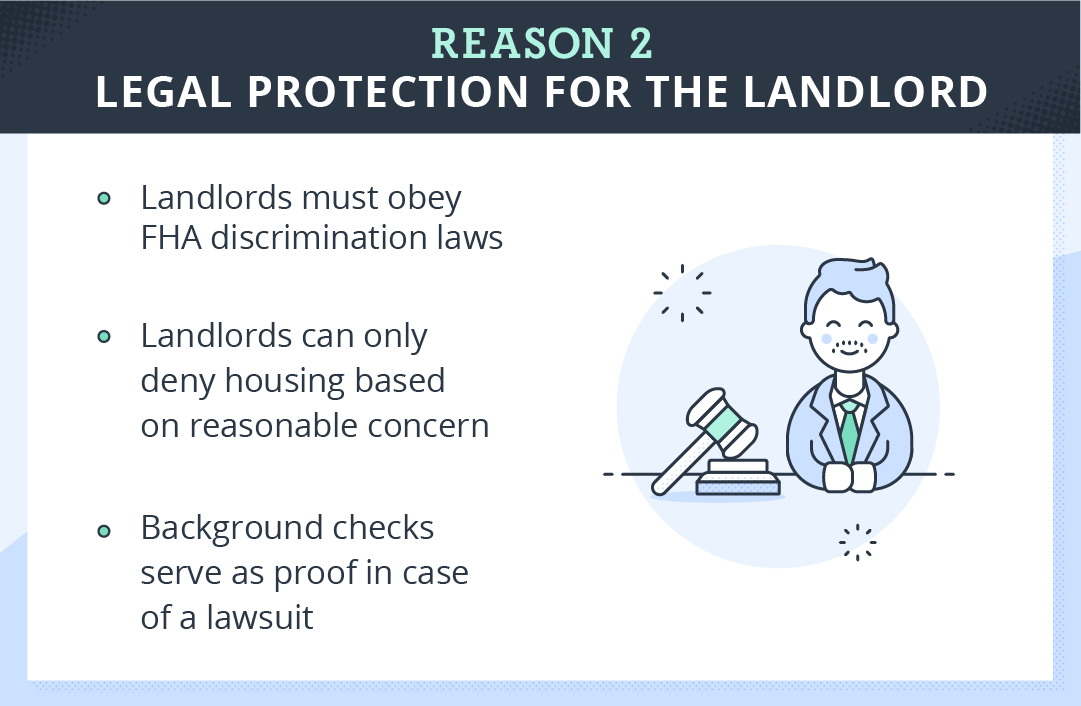
The Fair Housing Act (FHA) prohibits landlords from discriminating against renters or asking questions about:
- Race
- Color
- National origin
- Religion
- Sex
- Familial status
- Disability
Avoid anything that could be construed as discriminatory when selecting a tenant. Don’t include anything indicating your preference for one type of person over another in a rental listing, or make a decision based on protected characteristic information found in a screening report.
Criminal History
Different states have different policies on whether or not landlords can consider criminal history when making a decision. Some states allow it, but not all. Additionally, some local laws enable landlords to consider criminal history only when a past offense poses a legitimate safety risk to the property or community.
To safeguard yourself against discrimination claims and rejection lawsuits, landlords should store tenant screening reports (including background checks) and denied rental applications. As a best practice, we recommend keeping them on hand for at least 2 years.
We’ll dive into more legal considerations for tenant screening below.
3. Keeping Your Community Safe
When you skip a background check, you miss out on important details that could impact your other tenants and neighbors. Maybe an applicant has felony convictions for violent acts or has caused issues in past rentals. Knowing that information upfront helps you make better choices for everyone involved.
Screening carefully supports a safe, well-managed community and builds trust with your tenants.
4. Finding Responsible, Long-Lasting Tenants
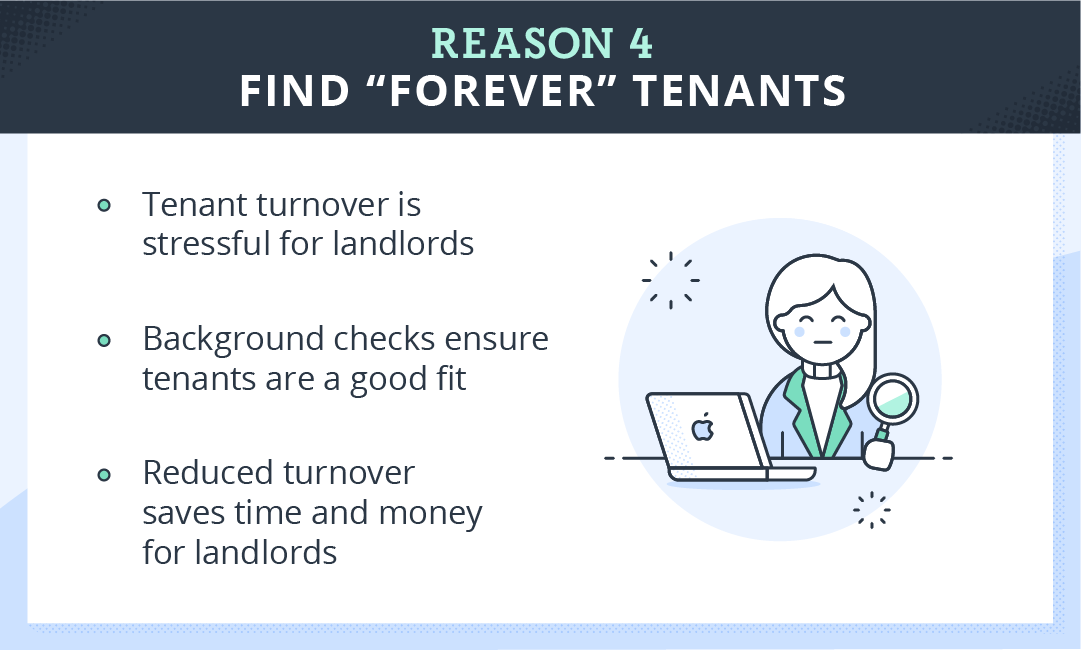
High turnover can quickly eat into your time and ROI. A background check helps you identify reliable renters who pay on time and take care of the property. These are the tenants who renew leases, reduce vacancy periods, and bring long-term stability to your rental business.
Analyzing Tenant Background Checks
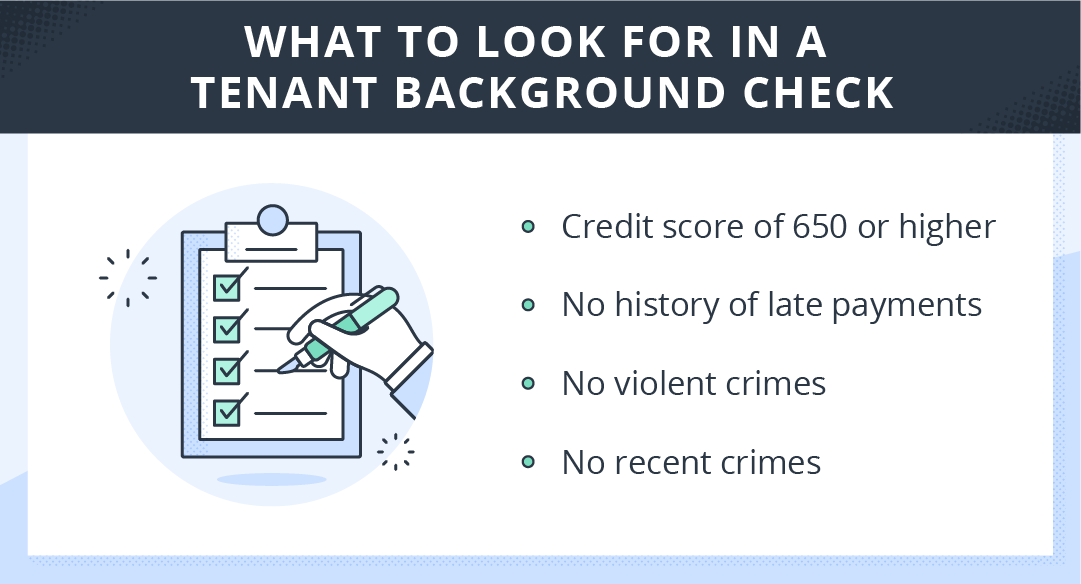
Once you’ve completed the background check, you’ll analyze both the credit and criminal history findings. With that information in hand, you can decide whether to move forward with the applicant.
If you’re not sure what to look for, we answered a few common questions about analyzing screening reports. Here’s what you need to know:
What is considered good credit for a tenant?
Most landlords set a minimum credit score requirement of 600–670. Good credit is technically considered 700–749, but most renters have lower-than-average credit scores. Why? Because they don’t have mortgage loans to boost their scores. At the time of writing, the average credit score in the U.S. is 715.
In addition to the applicant’s credit score, landlords can use these reports to learn about their payment history. While credit scores are a good indicator of financial health, most landlords find on-time payments more important. Look for applicants with a near-flawless history of on-time payments.
What if my applicant has a criminal history?
Depending on local housing laws, landlords may be able to deny housing to applicants with criminal histories if they believe the community is at risk. However, if an applicant has a felony and/or jail time on their record, it doesn’t necessarily mean they pose a danger to the community.
When deciding on an applicant’s criminal history, landlords should consider:
- How long ago did the offense happen?
- Was the applicant very young at the time?
- Do they have a history of criminal activity, or was it a one-time occurrence?
- What was the nature of the crime? Was it violent or non-violent?
How far back do background checks go?
Typically, rental screenings focus on the past 7 years, in line with the Fair Credit Reporting Act (FCRA). However, some states may have local laws that differ from this federal standard. Certain types of infractions, such as evictions and financial delinquencies, may hold relevance for an extended period.
Pro Tip: Always be aware of state and local laws governing tenant screening. Knowing these laws can help to ensure compliance and inform your decision-making process.
How long do background checks take?
A standard check takes anywhere from a few minutes to a week. The following factors can impact the timeline:
- The screening tool or service
- How comprehensive the check is
- How responsive the sources providing information are
If you’re using a background screening to reference criminal records from multiple jurisdictions, it could delay the process. As a best practice, landlords should balance thoroughness with efficiency when screening applicants. That way, you can make informed decisions while respecting the renter’s time.
How to Do a Background Check on a Tenant
 You can find the best tenant screening services online. Most landlords ask applicants to pay the screening fee, which often covers the background and credit checks.
To run a report, use a property management software solution like TurboTenant. TurboTenant lets you send digital applications to renters, who can then fill in their personal information for screening. It’s an easy way to avoid making a mistake when entering somebody’s personal information.
Then, within minutes, you’ll have access to a clear overview of the renter’s history, helping you make confident, informed decisions.
Sign up for a free TurboTenant account to run background checks seamlessly and manage all your rental documents in one convenient place.
Legal Considerations for Landlords
Property owners must follow both federal and state laws when screening tenants. Under the Fair Credit Reporting Act (15 U.S.C. § 1681–1681x), landlords must obtain written consent before running a tenant screening report and issue an adverse-action notice if they deny an applicant based on that information.
The Fair Housing Act (42 U.S.C. § 3601) also prohibits discrimination in the collection or use of background information during the screening process.
Many states now have “fair chance” housing laws that spell out when and how landlords can review an applicant’s criminal history. While the details vary by location, the goal remains the same: to create a fair, consistent screening process for all renters. For example:
- California: Landlords must not rely solely on arrest records that didn’t result in a conviction and must apply individualized assessments when using criminal history in housing decisions (Cal. Gov. Code § 12952).
- Colorado: Under the Rental Application Fairness Act (Colo. Rev. Stat. § 38-12-904), it is an unfair housing practice to consider arrest records or sealed criminal records, and for most convictions, landlords may not look beyond 5 years (except for enumerated offenses).
- New York City: With the Fair Chance for Housing Act (Local Law 24 of 2023), landlords may not conduct criminal history inquiries until after a conditional offer and must follow a written “individualized assessment” process.
- Illinois: The Human Rights Act (775 Ill. Comp. Stat. 5/3-102) makes it unlawful to discriminate in real estate transactions based on an arrest record, and landlords must evaluate each applicant individually if using criminal history.
Before screening tenants, review your state’s landlord-tenant laws to confirm what questions you can legally ask, how far back you can look, and how to document your decision.
DISCLAIMER: TurboTenant, Inc. does not provide legal advice. This material has been prepared for informational purposes only. All users are advised to check all applicable local, state and federal laws and consult legal counsel should questions arise.
Tenant Background Check FAQs
What background check do most landlords use?
Most landlords conduct checks on a renter’s criminal, credit, and eviction history.
How long does a rental background check take?
They can take anywhere from a few minutes to a week.
What would cause a red flag on a background check?
- Criminal history
- Poor credit history
- Information that’s inconsistent with an applicant’s answers on a rental application
Can I do a tenant background check on myself?
You can run a background check on yourself by using a third-party provider or compiling your own reports from the credit bureaus to see where you stand.