Join the 1 million+ independent landlords who rely on TurboTenant to create welcoming rental experiences.
No tricks or trials to worry about. So what’s the harm? Try it today!
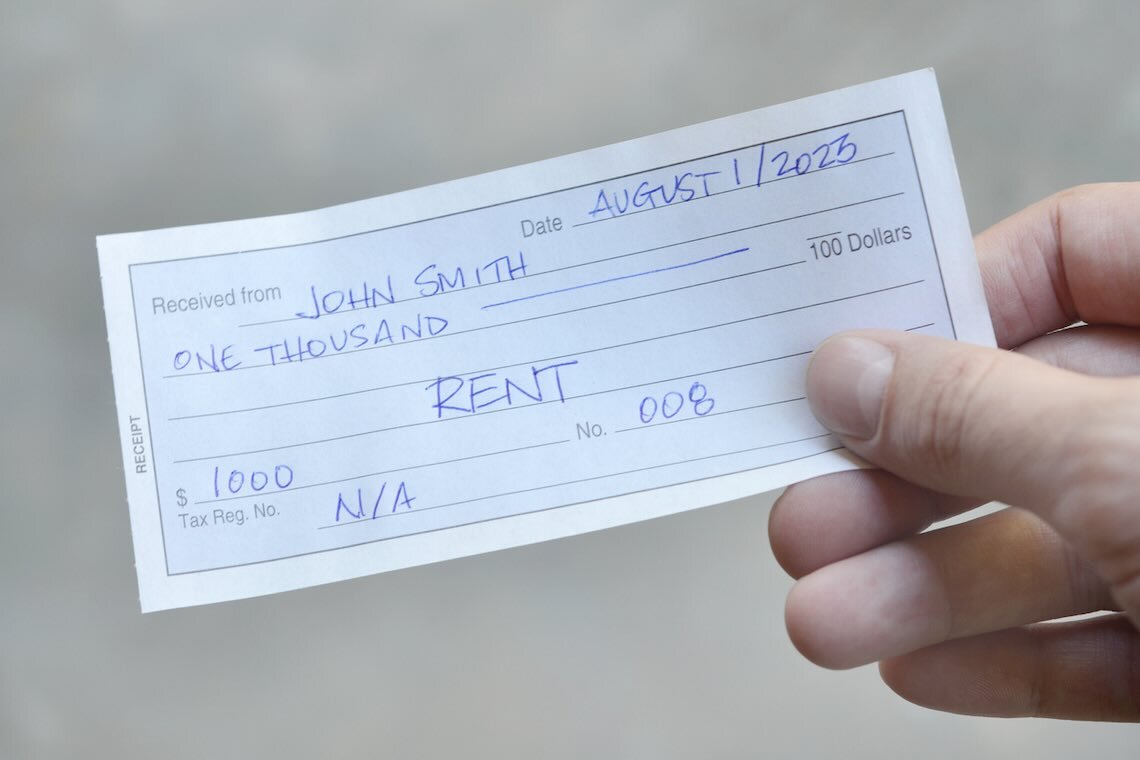
Whether you own one rental property or 100, being a landlord means that you’re running a business. And like with any other business, keeping reliable records protects you from disputes and potential lawsuits. Rent receipts are a great way to maintain transparency and establish a paper trail in case a dispute or conflict pops up along the way.
One critical issue regarding rent receipts is in understanding how different states legislate them. Some require a receipt for every payment type, while others stipulate that renters must only receive one for cash payments.
Since there can be some confusion about when and how to issue a rent receipt, why not issue a digital rent receipt to every tenant to avoid rental property accounting issues down the road?
In this guide, our team at TurboTenant will explore rent receipts, how different cities and states regulate them, and the importance of integrating payments with rent collection software to streamline landlords’ processes.
Traditionally, rent receipts follow a simple template: For each payment, the landlord writes out the amount paid, the date and method of payment, the rental period covered, the property address, and the names of both the landlord and tenant in a plain rent receipt book — all the basics.
Even though these are simple and flimsy pieces of paper, they serve as essential records. For tenants and landlords, this simple document can save each party significant frustration in the long run.
For example, a landlord who keeps meticulous records ensures that any payment disputes with their tenants can be resolved quickly by a simple review of the books. A thorough paper trail is every landlord’s best friend.
On the other hand, a responsible tenant can point to their collection of receipts to prove they’ve paid on time every month, quickly dispelling any questions about late or missed payments. It’s best for both parties to record payments sent and received to ensure a smooth and long-term business relationship.
Some states and cities require rent receipts as proof of payment for rent. However, local governments sometimes have their own landlord-tenant laws. In these cases, knowing exactly when to issue a receipt can be confusing. For example, in Ohio, the state government does not explicitly state that landlords must provide them, but in Columbus, it’s necessary.
To further illustrate this legal conundrum, Hawaii mandates that tenants receive a receipt for every rent payment. New York law states that landlords must provide them for every cash or money order payment. On the other side of the country, Colorado enacted legislation requiring every cash rent payment to receive a receipt, and many other states require them upon request.
For out-of-state landlords, or landlords with a diverse portfolio across the entire country, keeping track of what is and isn’t required when collecting rent can quickly feel overwhelming. Here’s a quick guide to some state-level rent receipt laws across the US:
(Note: This list is not exhaustive, and does not cover laws passed at the city, county, or town level. Check your local guidelines, as well as confirming state guidelines, to stay up-to-date.)
Regardless of the legal requirements, tracking rent payments for both landlords and tenants is good practice. The ability to quickly prove whether a tenant paid or not can be the difference between sleepless nights and getting a solid eight hours.
 The digital age has seen the development of numerous solutions to simplify day-to-day business operations. With the rise of online property management software, whether you manage a small or large portfolio, investing in a digital platform can save you time and money.
Large-scale, corporate-owned apartment complexes often utilize online portals that enable tenants to make payments online, and even if you only manage one property, a digital solution could be exactly what you need to level up your business. And if you choose TurboTenant, you won’t need to pay an arm and a leg.
Online portals make rent collection easy, saving landlords, property management companies, and tenants from the hassle of making trips to the bank to withdraw or deposit cash.
One of the most critical benefits of a digital payment system is that a printable PDF receipt is automatically generated and emailed to both parties. Systems like this are not only convenient, but they also enable alternative payment methods, opening the door to credit card transactions and helping you meet your tenants where they are.
Cash, money orders, and checks are cumbersome compared to credit and debit cards, and the challenge of relying on platforms like Zelle and Venmo further complicates the process.
Plus, more than ever before, tenants want to pay with travel or cash-back cards to take advantage of the deals their cards offer. Without online portals, credit card payment options simply don’t exist. Flexible payment options are a significant advantage for renters, so offering a variety can make your property more attractive to high-value tenants and reduce the time your units are vacant.
Unlike large property management companies, many smaller landlords lack the internal infrastructure to facilitate convenient rent collection. That means many landlords collect cash, money orders, and checks before writing receipts out by hand.
It can be an acceptable system for landlords with only a few doors, but as a landlord’s portfolio grows, the challenge of rent collection becomes more significant. And for landlords who manage properties remotely, the process of collecting rent payments can represent a significant logistical challenge.
A smart way for landlords to simplify rent collection while staying ahead of legislative changes is to digitize the entire property management process by implementing automated rent collection.
 Landlords seeking to streamline their property management processes can reap immediate benefits from selecting a web-based software that automatically generates digital rent receipts for every payment received, regardless of whether the tenant pays with cash, debit, or credit card.
However, remember that rent collection (and receipts for rent payments) is just one aspect of rental property management. Systems that track rent payments and expenses make the financial aspect of property management efficient and seamless by automatically importing them into accounting software.
Instead of filling out a receipt by hand for each tenant, collect rent money online, and automatically deposit the payments into the account of your choosing. It makes your tenants’ lives easier while taking the runaround of picking up checks off your plate.
TurboTenant automatically generates rent receipts for every payment received. But it’s not just for rent collection. TurboTenant can also send rent reminders, automatically apply late fees, allow for autopay, and securely connect bank accounts for seamless payment transfers.
And, when a tenant moves out, TurboTenant simplifies the advertising, application, tenant screening, and lease agreement process to help you quickly reduce vacancy rates and fill your units with qualified tenants.
For many traditional landlords, their tried-and-true analog system is free… except for new rent receipt books, gas for car rides to the bank, and the incalculable cost of time wasted on inefficient processes. However, it can sometimes be challenging to recognize the value when all you see is an eye-popping subscription fee.
But here’s the best part: TurboTenant is free for landlords. Sign up and gain immediate access to online rent collection and digital rent receipts. Your tenant simply pays a small fee when they send their payment.
While it’s a small fee for them, it’s a huge time saver for you.
As we’ve discussed, a complicated and ever-changing legal landscape can cloud the information on how and when landlords are required to provide tenants with a rent receipt. State governments pass new laws every year, and staying up-to-date with their nuances can be challenging.
And knowing the laws for your state isn’t always enough. Some cities add their own guidelines that require landlords to provide receipts for each transaction, while others do not. With all this in mind, it’s a good idea to provide rent receipts for every rent transaction by default.
Sign up for a free account today and automate your rent receipt collection for the better.
Disclaimer: This blog is for informational purposes only and is published by TurboTenant. It is not legal, financial, or tax advice. Laws and regulations for landlords vary by state and locality and may change over time. Always consult a qualified attorney, accountant, or local housing authority before making decisions related to your rental property. The publisher and authors assume no responsibility for actions taken based on the information provided.
At a minimum, rent receipts should include the following details:
A rent receipt is a document that confirms the amount and date of payment, and is given by the landlord to the tenant as confirmation. It establishes a paper trail for the transaction and is an excellent way for landlords to track their accounting and prevent disputes down the road.
Some states and cities require them for all transactions, while others only require them for specific transactions, and still others don’t require them at all. To stay ahead of ever-changing laws, providing rent receipts as a matter of policy is a good idea for all landlords.